
The 2017 Stanley J. Korsmeyer Award: James E. Crowe Jr., MD

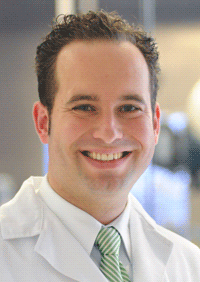
James E. Crowe Jr., MD, is the recipient of the 2017 American Society for Clinical Investigation’s (ASCI) Stanley J. Korsmeyer Award, in recognition for his research leading to the development of innovative technologies for the isolation and study of antiviral antibodies and for significantly advancing the fields of virology and immunology.

Dr. Crowe’s research group has isolated human monoclonal antibodies for many pathogenic viruses, including Zika, HIV, dengue, influenza, Ebola, norovirus, respiratory syncytial virus (RSV), rotavirus, and others. Antibodies discovered by his laboratory currently are in clinical development programs for several targets. His research has led to a number of patents and licensures of antibodies and vaccines, in particular for RSV, that have progressed to clinical trials.

Dr. Crowe drew inspiration from his father, a pediatric radiologist. Seeing his father read films intrigued him and later inspired his interest in structure-based design of vaccine development and computational immunology. He received his BS from Davidson College and became interested in service and global issues. He received his MD in 1987 from the University of North Carolina School of Medicine, where he also completed his pediatric residency in 1990. He worked on infectious diseases in West and East Africa, and this experience prompted him to think about how to have a broader impact on the diseases affecting these populations.

In 1995, he did a postdoctoral fellowship under Dr. Robert M. Chanock at the National Institutes of Health, where he worked on developing vaccines for RSV. He said, “I enjoyed the vaccine development work, but I was always thinking, ‘How does the immune system work? What is it that we are trying to accomplish with these vaccines? And are these vaccines going to trigger the types of responses we want?’ ” Following this five-year laboratory fellowship, he did a clinical fellowship in pediatric infectious diseases at Vanderbilt University Medical Center leading to board certification in that field. He started his faculty life at Vanderbilt as an Assistant Professor in Pediatrics and Microbiology and Immunology in 1996 and became Associate Professor in 2001. One of his major initial efforts was the development of a technique for generating recombinant human monoclonal antibodies to rotavirus from single antigen-specific B cells. This technique was then expanded to generate monoclonal antibodies against other viruses, including poxviruses. Presently, his laboratory is working with over 50 targets, most recently Zika, Ebola, and dengue.

Extending his work as a scientist, Dr. Crowe is also passionate about mentoring. He has received awards for mentoring postdoctoral fellows at Vanderbilt and has trained a large number of successful scientists at the pre- and postdoctoral level, with many of his trainees obtaining faculty positions at Vanderbilt and elsewhere.

Dr. Crowe is Professor of Pediatrics, Pathology, Microbiology and Immunology and the Ann Scott Carell Chair at Vanderbilt University, where he is also Director of the Vanderbilt Vaccine Center. Dr. Crowe was elected to the ASCI in 2004, the Association of American Physicians in 2009, and the National Academy of Medicine in 2014. In 2016, he was awarded Vanderbilt University’s John H. Exton Award, for research leading to innovative biological concepts.
Election of new members, 2017

The ASCI is pleased to report the results of a recent ballot to the Active segment of the membership, which asked voters to approve the Council’s recommendations for membership nominees to be elected this year. The vote, audited and confirmed late last week, returned overwhelmingly in favor of the recommendations.

The ASCI will welcome 64 new members this year. This new class of members is a remarkable and accomplished group of physician-scientists representing a diverse range of disciplines, specialties, and institutions.

The ASCI’s class of 2017

Member Institution Specialty
Abdulkadir, Sarki A. Northwestern University Feinberg School of Medicine Pathology
Alizadeh, Ash Stanford University School of Medicine Internal Medicine
Arora, Vineet M. University of Chicago Pritzker School of Medicine Internal Medicine
Auerbach, Andrew D. University of California, San Francisco, School of Medicine Internal Medicine
Bass, Adam J. Harvard Medical School, Dana-Farber Cancer Institute Medical Oncology
Behrens, Edward M. University of Pennsylvania School of Medicine Pediatrics
Beroukhim, Rameen Harvard Medical School, Dana-Farber Cancer Institute Medical Oncology
Bilimoria, Karl Northwestern University Feinberg School of Medicine Surgical oncology
Bose, Ron Washington University in St. Louis School of Medicine Oncology
Bowler, Russell Paul National Jewish Health Internal Medicine
Calakos, Nicole Duke University School of Medicine Neurology
Chandarlapaty, Sarat Memorial Sloan Kettering Cancer Center Internal Medicine
Chi, Ping Memorial Sloan Kettering Cancer Center Medicine
Corcoran, Ryan B. Harvard Medical School, Massachusetts General Hospital Oncology
Crompton, Peter D. NIH, National Institute of Allergy and Infectious Diseases Internal Medicine
Cypess, Aaron M. NIH, National Institute of Diabetes and Digestive and Kidney Diseases Internal Medicine
Diehn, Maximilian Stanford University School of Medicine Radiation Oncology
Dimick, Justin University of Michigan Medical School Surgery
Dransfield, Mark T. University of Alabama at Birmingham School of Medicine Internal Medicine
Feldman, Brian J. Stanford University School of Medicine Pediatrics
Feldstein, Ariel E. University of California, San Diego, School of Medicine Pediatrics
Fernandez-Zapico, Martin E. Mayo Clinic Cancer Biology
Fornoni, Alessia University of Miami Miller School of Medicine Internal Medicine
Fry, Terry J. NIH, National Cancer Institute Pediatrics
Galindo, Rene L. University of Texas Southwestern Medical Center Pathology
Gleason, Thomas L. G. University of Pittsburgh School of Medicine Surgery
Greka, Anna Harvard Medical School, Brigham & Women’s Hospital Medicine
Habtezion, Aida Stanford University School of Medicine Medicine
Haining, W. Nicholas Harvard Medical School, Dana-Farber Cancer Institute Pediatrics
Han, MeiLan University of Michigan Medical School Pulmonology
Herzog, Erica L. Yale School of Medicine Pulmonology
Jaffrey, Samie R. Weill Cornell Medical College Pharmacology
Jagsi, Reshma University of Michigan Medical School Radiation Oncology
Kirkpatrick, Beth Diane University of Vermont College of Medicine Internal Medicine
Kottilil, Shyamasundaran University of Maryland School of Medicine Internal Medicine
Krupnick, Alexander S. University of Virginia School of Medicine Surgery
Kundu, Mondira St. Jude Children’s Research Hospital Pathology
Kurtis, Jonathan David Brown University Medical School Pathology
Lam, Wilbur A. Emory University School of Medicine Pediatrics
Liu, George Y. Cedars Sinai Medical Center Pediatrics
Lovly, Christine M. Vanderbilt University School of Medicine Medical Oncology
Machado, Roberto University of Illinois at Chicago Internal Medicine
Majeti, Ravindra Stanford University School of Medicine Internal Medicine
Mody, Lona University of Michigan Medical School Aging
Musunuru, Kiran University of Pennsylvania School of Medicine Cardiovascular Medicine
Muthukumar, Thangamani Weill Cornell Medical College Nephrology
Pandrea, Ivona University of Pittsburgh School of Medicine Pathology
Parikh, Samir M. Harvard Medical School, Beth Israel Deaconess Medical Center Medicine
Patel, Manesh R. Duke University School of Medicine Cardiovascular Disease
Perencevich, Eli N. University of Iowa Carver College of Medicine Internal Medicine
Phipatanakul, Wanda Harvard Medical School, Boston Children’s Hospital Pediatrics
Ramalingam, Suresh Sakkarai Emory University School of Medicine Medical Oncology
Richards, John Brent McGill University Faculty of Medicine Epidemiology
Sampson, John H. Duke University Medical Center Neurosurgery
Sarantopoulos, Stefanie Duke University School of Medicine Medicine
Schaaf, Christian P. Baylor College of Medicine Medical Genetics
Schimmer, Aaron David University of Toronto Faculty of Medicine Internal Medicine
Seeley, William Ward University of California, San Francisco, School of Medicine Neurology
Sipkins, Dorothy Duke University Medical Center Cancer Biology
Steinman, Michael A. University of California, San Francisco, School of Medicine Geriatrics
Wang, Liewei Mayo Clinic Cancer Biology
White, Douglas Blakemore University of Pittsburgh School of Medicine Critical Care Medicine
Wolf, Matthew Joseph University of Virginia School of Medicine Internal Medicine
Yang, Xiangdong William University of California, Los Angeles, David Geffen School of Medicine Psychiatry

Call for Council nominations, 2017

The Society is seeking nominations for four vacancies on the ASCI Council: Vice President (4-year term, spring 2017-2021) and three Councilor positions (3-year term, 2017-2020).

All Council members are expected to support the activities of and attend the ASCI annual meeting, and to participate in the general governance of the Society, including two in-person meetings (fall and spring, coordinate with the annual meeting), and conference calls (typically every other month). All Council members participate in the review of membership nominations.

The Vice President transitions to President-Elect in year 2 and President in year 3. For the 2nd through 4th years of this position, this member is expected to participate significantly in matters related to the Joint Meeting. In the Presidential year (year 3), the member convenes a face-to-face Council meeting and oversees related review processes for nominations, notably including those to membership. The President works closely with the Association of American Physicians to create the annual meeting program, and the member presents the traditional Presidential Address at the meeting. In year 4, the President transitions to Immediate Past President, serving as an advisor to the current President and with full Council responsibilities and privileges.

The Council is supported by an Executive Director, Managing Director, and other staff members who oversee the day-to-day operations of the Society and effect initiatives as directed by the Council.

Members who will be 55 or younger in 2020 are eligible for nomination. Nominations may be submitted online through February 14, 2017, at 11:59 PM EST and consist of a 250-word summary of accomplishments accompanied by an NIH-style brief biosketch (PDF only). If the nomination is intended for a specific vacancy, please note this in the nomination comments.

Members must submit nominations through their member accounts.

Call for nominations: 2017 Young Physician-Scientist Awards

Nominations for 2017

We are pleased to call for nominations for the ASCI’s 2017 Young Physician-Scientist Awards. This is an excellent opportunity for a young faculty member to be recognized at the 2017 Joint Meeting.

We seek nominations of outstanding physician-scientists who have recently received their first faculty appointment (preferably in the last 5 years). Nominees must be funded by a current NIH K or equivalent career-development award (in or outside the United States). However, we welcome nominations of NIH intramural physician-scientists on the basis of their appointment only.

Those selected for this Awards program will:

  • receive a $500 honorarium
  • attend the 2017 Joint Meeting, April 21-23, at the Fairmont Chicago
  • attend the invitation-only ASCI President’s Reception on Friday, April 21
  • present their work at the ASCI’s Food & Science Evening, Saturday, April 22

Up to 40 Awards will be given for 2017. The following materials are required for nominations, which must be submitted online on or before the deadline, January 16, 2017, at 11:59 pm, U.S. Eastern:

Nominations can only be made by ASCI members through their online accounts.

Call for nominations, 2017 Stanley J. Korsmeyer Award

Nominees for the Stanley J. Korsmeyer Award must be ASCI members who are 55 years of age or younger as of January 1, 2017. They shall have made significant contributions to biomedical science and shall have adhered to the principles of scientific excellence that the ASCI exemplifies. The nominee should have a record that reflects high standards of intellectual integrity, a deep and abiding respect for the community of biomedical scientists, and a strong commitment to mentoring the next generation of physician-scientists. Prior nominees may be re-nominated. However, current ASCI Council members and prior Award recipients may not be nominated.

Nominations consist of:

  • a summary of the nominee’s accomplishments (in plain text, not to exceed 250 words),
  • a brief NIH biosketch (as a PDF),
  • and a trainee table (preferred as a PDF).

Nominations must be submitted by ASCI members through their online accounts.

The deadline for nominations is October 24, 2016, at 11:59 PM EDT.

Nominations for 2017 membership

Nominations for 2017 membership may be submitted through September 21, 2016. Proposers and supporters of nominations should review the Membership Nomination Guide carefully. Questions regarding nominations should be sent by e-mail to staff@the-asci.org.

Note to submitters: The ASCI sends acknowledgment of submissions by e-mail after they have been reviewed and found to be complete. Submitters can check the status of their submissions (nominations and support forms) online by accessing their member accounts.

Submitting nominations

To ensure proper tracking of nominations, all information and documents must be supplied online.
  • First, access your member account
  • After you have logged in to your account, select the “Nominations” tab, then search the nominee database. Links will appear in search results to guide you in the next steps.
  • Your nominee may already be in the ASCI database because the nominee was previously nominated or because a nomination or support form has been started for the nominee for this nomination cycle.

Proposers: Once you have supplied the requested information about your nominee (name, contact information, etc.), you will be able to upload required documents. You will also be able to add Seconder and General Supporter information to the nomination, although supporters will need to supply their comments via their own member accounts.

Seconder and General Supporters: Forms may be drafted and submitted online after selecting the applicable nominee from search results or after adding requested information about the nominee you are supporting. (NOTE: General Supporters who are not ASCI members may complete the nomination support template and e-mail it to for handling. Please indicate clearly your contact information and the name and institution of the nominee you are supporting.)

Further clarification

  • Age criterion for Active and Foreign Associate nominees. Nominees in these categories must be age 50 or younger as of January 1, 2017.
  • Exceptions to the age criterion cannot be made. Although the ASCI Council understands that a nominee’s progress may have been delayed because of unavoidable or extreme circumstances, the Council has on multiple occasions discussed exceptions and concluded from each discussion that no policy could be implemented fairly and durably.
  • Limit on number of nominations per nominee. The number of nominations per nominee is limited to 3, with the following exception: In 2013 the age limit for eligibility was increased from age 45 to age 50 or younger. In recognition of this revision, Active and Foreign Associate candidates who reached 3 nominations before or during the 2013 nomination cycle may be nominated one more time (for a maximum of 4 nominations) if they meet the following age criteria: this cycle (2017), age 49 to 50; 2018, age 50.
  • Limit on number of nominations proposed, seconded, or supported. There is no limit to the number of nominations a member may propose or support (either as Seconder or General Supporter).
  • Ph.D.-only candidates. Active and Foreign Associate nominations are, per the ASCI’s bylaws, restricted to physicians.
  • M.D.-equivalent candidates are eligible for nomination.
  • Faculty appointment versus nominee’s country of residence. The distinction between Active and Foreign Associate nominations is made on the basis of residence, not faculty appointment. Active nominees must reside in the U.S. or Canada. Candidates residing elsewhere should be nominated in the Foreign Associate category.
  • In press or accepted manuscripts can be included in a nominee’s bibliography. However, manuscripts submitted or in review should generally not be listed.

Call for nominations, 2017 Harrington Prize for Innovation in Medicine

National and international nominations are being sought for the fourth annual Harrington Prize for Innovation in Medicine, which honors a physician-scientist who has moved science forward with achievements notable for innovation, creativity and potential for clinical application.

The deadline for nominations is August 29, 2016. For nomination guidelines and online submission of nominations, visit: HarringtonDiscovery.org/ThePrize.

The Harrington Prize, which carries a $20,000 honorarium, is a collaboration between The American Society for Clinical Investigation (ASCI), one of the nation’s oldest and most respected medical honor societies, and the Harrington Discovery Institute at University Hospitals in Cleveland, Ohio – part of The Harrington Project for Discovery & Development. The Harrington Discovery Institute is a nonprofit institute dedicated to supporting physician-scientists in their work to transform bench discoveries into promising leads that may result in novel therapeutics.

Both organizations recognize the obstacles associated with turning discoveries into medicines that improve human health, and they are eager to highlight those who have navigated the path successfully or whose work has led to novel treatments.

A committee composed of members of the ASCI Council and the Harrington Discovery Institute Scientific Advisory Board will review the nominations and select the awardee.

In addition to receiving the honorarium, the 2017 recipient will deliver The Harrington Prize Lecture at the 2017 Joint Meeting of the Association of American Physicians (AAP), the ASCI, and the American Physician Scientists Association (APSA) on April 21-23, 2017, will participate at the 2017 Harrington Discovery Institute annual symposium (May 24-25, 2017), and will publish a personal essay in the Journal of Clinical Investigation.

Previous award winners are Jeffrey M. Friedman, MD, PhD (2016), Douglas R. Lowy, MD (2015), and Harry C. Dietz, MD (2014). For questions or more information about the nomination requirements, visit HarringtonDiscovery.org/ThePrize or contact Natalie Haynes, Harrington Discovery Institute Program Director, at Natalie.Haynes@HarringtonDiscovery.org.

The ASCI’s 2016 Ballot results

The Active segment of the ASCI membership recently voted on candidates for Council vacancies, on nominees recommended for election this year to the Society, and on a change to the organization’s bylaws. The results were recently audited and confirmed.

The following members will join the Council at the conclusion of the 2016 annual meeting, April 15-17:

Elected to Council

Vice President: Kieren Marr, MD, Associate Vice-Chair of Medicine for Innovation at Johns Hopkins. She was elected in 2009.
Secretary-Treasurer Elect: Hossein Ardehali, MD, PhD, Professor of Medicine-Cardiology and Professor of Pharmacology, Northwestern Medicine. He was elected in 2012.
Councilor: Andrew P. Fontenot, MD, Henry N. Claman Professor of Medicine, University of Colorado Denver. He was elected in 2009.

Elected members, 2016

The Council received 160 membership nominations for 2016 and recommended 74 nominees for election; the recommendation was approved. Those being inducted at the ASCI Dinner and New Member Induction Ceremony on April 15, 2016, are listed below.

Derek W. Abbott, MD, PhD

Case Western Reserve University School of Medicine

Vahid Afshar-Kharghan, MD

University of Texas M.D. Anderson Cancer Center

John H. Alexander, MD, MHSc

Duke University & Duke-NUS Graduate Medical School

Balamurali K. Ambati, MD, PhD, MBA

University of Utah School of Medicine

Joseph R. Arron, MD, PhD

Genentech

Euan A. Ashley, MRCP, DPhil, FACC, FESC

Stanford University School of Medicine

Kamran Atabai, MD

University of California, San Francisco, School of Medicine

Jasmohan S. Bajaj, MBBS, MD, MS

Virginia Commonwealth University School of Medicine

Robert H. Baloh, MD, PhD

Cedars Sinai Medical Center

Sanjay Basu, MD, PhD

Stanford University School of Medicine

Trever Bivona, MD, PhD

University of California, San Francisco, School of Medicine

Catherine A. Blish, MD, PhD

Stanford University School of Medicine

George A. Calin, MD, PhD

University of Texas M.D. Anderson Cancer Center

Stephen Y. Chan, MD, PhD

University of Pittsburgh School of Medicine

John Tzu-yu Chang, MD

University of California, San Diego, School of Medicine

Keith A. Choate, MD, PhD, FAAD

Yale School of Medicine

Hyung J. Chun, MD

Yale School of Medicine

Peter A. Crawford, MD, PhD

Sanford-Burnham Medical Research Institute at Lake Nona

Jeffrey R. Curtis, MD, MS, MPH

University of Alabama at Birmingham School of Medicine

Sandip K. Datta, MD

NIH, National Institute of Allergy and Infectious Diseases

Michael A. Davies, MD, PhD

University of Texas M.D. Anderson Cancer Center

Benjamin Dekel, MD, PhD

The Edmond and Lily Safra Children’s Hospital, Chaim Sheba Medical Center

Wonder Puryear Drake, MD

Vanderbilt University School of Medicine

Ronny I. Drapkin, MD, PhD

University of Pennsylvania School of Medicine

Elia J. Duh, MD

Johns Hopkins University School of Medicine

Margaret Feeney, MD, MMSc

University of California, San Francisco, School of Medicine

Todd A. Fehniger, MD, PhD

Washington University in St. Louis School of Medicine

Christopher Robert Flowers, MD, MS

Emory University School of Medicine

Lawrence B. Gardner, MD

New York University School of Medicine

Rasheed A. Gbadegesin, MBBS, MD

Duke University School of Medicine

William Michael Geisler, MD, MPH

University of Alabama at Birmingham School of Medicine

Pradipta Ghosh, MD

University of California, San Diego, School of Medicine

Hitinder S. Gurm, MBBS

University of Michigan Medical School

Jeffrey P. Henderson, MD, PhD

Washington University in St. Louis School of Medicine

Tobias M. Hohl, MD, PhD

Memorial Sloan Kettering Cancer Center

Melina R. Kibbe, MD

Northwestern University Feinberg School of Medicine

Gregory Dale Kirk, MD, MPH, PhD

Johns Hopkins University School of Medicine

Harriet Margot Kluger, MD

Yale School of Medicine

Bernhard Kühn, MD

University of Pittsburgh Children’s Hospital

Pamela M. Ling, MD, MPH

University of California, San Francisco, School of Medicine

David B. Lombard, MD, PhD

University of Michigan Medical School

Sami N. Malek, MD

University of Michigan Medical School

J. Michael McWilliams, MD, PhD

Harvard Medical School, Brigham & Women’s Hospital

Funda Meric-Bernstam, MD

University of Texas M.D. Anderson Cancer Center

Timothy M. Miller, MD, PhD

Washington University in St. Louis School of Medicine

James K. Min, MD

Weill Cornell Medical College

Andy Minn, MD, PhD

University of Pennsylvania School of Medicine

Goutham Narla, MD, PhD

Case Western Reserve University School of Medicine

Aimee S. Payne, MD, PhD

University of Pennsylvania School of Medicine

Sallie Robey Permar, MD, PhD

Duke University School of Medicine

Andrew Pieper, MD, PhD

University of Iowa Carver College of Medicine

Carla M. Pugh, MD, PhD

University of Wisconsin Medical School

Benjamin Alexander Raby, MD, CM, MPH

Harvard Medical School, Brigham & Women’s Hospital

Soumya Raychaudhuri, MD, PhD

Harvard Medical School, Brigham & Women’s Hospital

Daniel Salo Reich, MD, PhD

NIH, National Institute of Neurological Disorders and Stroke

Caterina Rosano, MD, MPH

University of Pittsburgh School of Public Health

Ivan O. Rosas, MD

Harvard Medical School, Brigham & Women’s Hospital

Bernd Schnabl, MD

University of California, San Diego, School of Medicine

Lecia VanDam Sequist, MD, MPH

Harvard Medical School, Massachusetts General Hospital

Nigam H. Shah, MBBS, PhD

Stanford University School of Medicine

Sunil Singhal, MD

University of Pennsylvania School of Medicine

Agata Smogorzewska, MD, PhD

The Rockefeller University

Justin Stebbing, MA, FRCP, FRCPath, PhD

Imperial College London

Ulrich G. Steidl, MD, PhD

Albert Einstein College of Medicine of Yeshiva University

Helen Chun-Hui Su, MD, PhD

NIH, National Institute of Allergy and Infectious Diseases

Rebecca L. Sudore, MD

University of California, San Francisco, School of Medicine

Stephen H. Tsang, MD, PhD

Columbia University College of Physicians & Surgeons

Jack W. Tsao, MD, DPhil

University of Tennessee Health Science Center

David Tuveson, MD, PhD

Cold Spring Harbor Laboratory

Conrad Christian Weihl, MD, PhD

Washington University in St. Louis School of Medicine

Juan Pablo Wisnivesky, MD, DrPH

Icahn School of Medicine at Mount Sinai

Sean M. Wu, MD, PhD, FACC

Stanford University School of Medicine

Koji Yasutomo, MD, PhD

Tokushima University

Manuel Yepes, MD

Emory University School of Medicine

The ASCI’s 2016 Young Physician-Scientist Awards

The ASCI congratulates the 40 recipients of its 2016 Young Physician-Scientist Awards, who will be recognized at the 2016 AAP/ASCI/APSA Joint Meeting and present their work on April 16, 2016.

Awardee Institution
Dennis M. Abraham, MD Duke University Medical Center
Brian C. Belyea, MD University of Virginia, School of Medicine
Evan L. Brittain, MD, MSc Vanderbilt University
Timothy F. Burns, MD, PhD University of Pittsburgh
Jaehyuk Choi, MD, PhD Northwestern University School of Medicine
Jane Churpek, MD The University of Chicago
Janet L. Crane, MD Johns Hopkins University
Vinicio de Jesus Perez, MD Stanford University School of Medicine
Shadmehr (Shawn) Demehri, MD, PhD Massachusetts General Hospital, Harvard Medical School
Michelle R. Denburg, MD, MSCE The Children’s Hospital of Philadelphia
Elizabeth S. Egan, MD, PhD Stanford University School of Medicine
Sascha N. Goonewardena, MD University of Michigan
Andrew Caleb Hsieh, MD Fred Hutchinson Cancer Research Center
Yvonne Jean Huang, MD University of Michigan
Marcin Imielinski, MD, PhD Weill Cornell Medicine
Ravi Karra, MD, MHS Duke University
Hamed Khalili, MD, MPH Massachusetts General Hospital
Mark E. Kleinman, MD University of Kentucky
Birgit Knoechel, MD PhD Dana-Farber Cancer Institute
George Boateng Kyei, MB, ChB, PhD Washington University School of Medicine
Dan A. Landau, MD, PhD Weill Cornell Medicine
Edward B. Lee, MD, PhD University of Pennsylvania
James Lo, MD, PhD Weill Cornell Medical College
Alexander Marson, MD, PhD University of California, San Francisco
Shana E. McCormack, MD The Children’s Hospital of Philadelphia
Peggy Suejin Myung, MD, PhD Yale University
Ian J. Neeland, MD UT Southwestern Medical Center
Alexis Ogdie, MD, MSCE University of Pennsylvania
Tien Peng, MD University of California, San Francisco
Rithwick Rajagopal, MD, PhD Washington University School of Medicine
Tamer Sallam, MD, PhD University of California, Los Angeles
Amy Sanghavi Shah, MD, MS Cincinnati Children’s Hospital Medical Center
Ravi Shah, MD Beth Israel Deaconess Medical Center
Raymond E. Soccio, MD, PhD Perelman School of Medicine at University of Pennsylvania
Roderick J. Tan, MD, PhD University of Pittsburgh
Gregory Edward Tasian, MD, MSc, MSCE The Children’s Hospital of Philadelphia
David T. Ting, MD Massachusetts General Hospital Cancer Center
Christina Twyman-Saint Victor, MD University of Pennsylvania
Nikhil Wagle, MD Dana-Farber Cancer Institute
Elaine Wan, MD, FACC, FAHA Columbia University

Recipient of the 2016 Seldin~Smith Award: Christian P. Schaaf, MD, PhD


Christian Schaaf

The American Society for Clinical Investigation (ASCI) is pleased to announce that Christian P. Schaaf, MD, PhD, is the recipient of its inaugural Donald Seldin~Holly Smith Award for Pioneering Research. Dr. Schaaf is an Assistant Professor in the Department of Molecular and Human Genetics at Baylor College of Medicine and Investigator at the Texas Children’s Hospital’s Jan and Dan Duncan Neurological Research Institute.

Dr. Schaaf’s research focuses on understanding the genetic and molecular basis of human cognitive and behavioral disorders. The starting point of his work is always a patient or a family. After identifying the causative genetic defect, he performs deep and rigorous scientific inquiry. Two syndromes carry his name: Schaaf-Yang syndrome, which is characterized by intellectual disability, low muscle tone, feeding problems, and joint contractures; and Bosch-Boonstra-Schaaf optic atrophy syndrome, where patients have delayed development, intellectual disability, and atrophy of optic nerves, resulting in vision impairment. Subsequent to his genetic discoveries, others with these two syndromes have since been identified, and they are now being evaluated with an improved understanding of their conditions.

In the best tradition of the ASCI, Dr. Schaaf is a triple threat: a physician, a scientist, and an educator. “The degree to which I’ve been successful and fulfilled in the work that I do is due to the fact that I’m doing all three of these things,” he said. Dr. Huda Zoghbi, director of the Jan and Dan Duncan Neurological Research Institute at Texas Children’s Hospital, and mentor at Baylor College of Medicine, supported Dr. Schaaf’s nomination. “Christian doesn’t give up easily, and he has solved numerous medical mystery cases, empowering patients and their families by providing them an accurate diagnosis,” she wrote in her letter accompanying his nomination. “He embodies all of the best qualities of a caring physician and rigorous scientist.”

Development of the Seldin~Smith Award began several years ago with the goal of connecting the legacies of two heroes of the physician-scientist community with exceptionally creative early-career physician-scientists. These heroes are Donald Seldin (University of Texas Southwestern Medical Center) and Lloyd “Holly” Smith Jr. (University of California, San Francisco). The Seldin~Smith Award, now with its first honoree, complements the prestigious Stanley J. Korsmeyer Award from the ASCI, which recognizes senior physician-scientists who have made major contributions to science and mentorship. The ASCI is grateful to Drs. Seldin and Smith, who provided the inspiration for this Award through their storied careers of developing generations of outstanding physician-scientists.

Dr. Schaaf was selected from a group of highly qualified nominees in the United States and abroad. The applicants were evaluated by a Selection Committee of current and former ASCI leaders: Mukesh K. Jain and Vivian G. Cheung (Co-Chairs), Charles L. Sawyers, Elizabeth M. McNally, and Stuart H. Orkin. Finalists were evaluated by an Advisory Committee comprising five physician-scientist luminaries: Joseph L. Goldstein (Chair), Michael S. Brown, Arthur Weiss, Stanley B. Prusiner, and Robert J. Lefkowitz. The ASCI will provide Dr. Schaaf with an unrestricted award of $30,000 to advance his academic efforts, and the leadership of the ASCI will recognize Dr. Schaaf at its 2016 annual meeting, April 15-17, in Chicago. Dr. Schaaf will deliver a scientific talk at the ASCI’s 2017 annual meeting.

About the ASCI: Founded in 1908, the American Society for Clinical Investigation is one of the oldest and most esteemed nonprofit honor societies of physician-scientists. Membership is by election only, and only researchers who are 50 years of age or younger are eligible for nomination. Therefore, membership in the ASCI recognizes a researcher’s significant contributions, at a relatively young age, to the understanding of human disease. The Society counts among its ranks almost 3,000 members, many of whom are leaders in academic medicine and industry. Many members have been recognized by election to the U.S. National Academy of Sciences and the U.S. National Academy of Medicine. The ASCI is also proud to have among its membership winners of the Nobel Prize and the Lasker Award. The Society self-publishes the prestigious Journal of Clinical Investigation, a top-tier biomedical journal, and JCI Insight, launched in late 2015. The ASCI holds its annual meeting with the Association of American Physicians and the American Physician-Scientists Association.