Rexford S. Ahima elected as JCI Editor in Chief

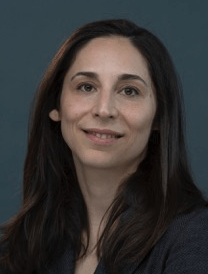
The ASCI is pleased to announce the election of Rexford S. Ahima, MD, PhD, to Editor in Chief of the Journal of Clinical Investigation, effective July 1. He will succeed Gordon Tomaselli, MD, who will become Dean of the Albert Einstein College of Medicine as of July 1. Dr. Ahima has served as a JCI Deputy Editor since July 2017, and he previously served as JCI Associate Editor from 2010 to 2012.

Dr. Ahima

Dr. Ahima, who will be the JCI’s 25th Editor in Chief since its founding in 1924, is Director of the Division of Endocrinology, Diabetes, and Metabolism; Professor of Medicine, Public Health, and Nursing; and Bloomberg Distinguished Professor of Diabetes at Johns Hopkins University. His research focuses on central and peripheral actions of adipocyte hormones in energy homeostasis, and glucose and lipid metabolism. Dr. Ahima is a member of the ASCI (elected 2005) and the Association of American Physicians (elected 2010), as well as a fellow of the American Association for the Advancement of Science.

The Johns Hopkins University-based Editorial Board will continue its stewardship of the JCI. Dr. Tomaselli will become a Deputy Editor, joining Arturo Casadevall, MD, PhD, and Gregg L. Semenza, MD, PhD.

The ASCI recently distributed ballots to Active members recommending Dr. Ahima’s election; nearly 52% of ballots were returned by the June 19 deadline, and voters were overwhelmingly positive about the recommendation. The ASCI’s Secretary-Treasurer, Hossein Ardehali, MD, PhD, oversaw the ballot audit; auditors were Benjamin D. Humphreys, MD, PhD (ASCI Secretary-Treasurer Elect) and Ajay Chawla, MD, PhD.

A tribute to Lloyd H. (“Holly”) Smith Jr., MD

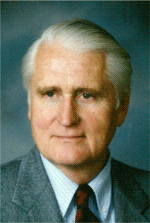
Lloyd Hollingsworth (“Holly”) Smith Jr., MD, passed away on June 18. He was 94.

Elected to the ASCI in 1961, Dr. Smith served as a Councilor from 1966 to 1969 and was the 1969-1970 President. From 1964 to 1985, he served as Chair of the Department of Medicine at the University of California, San Francisco, leading the institution to world-class status in part through a steadfast commitment to incorporating basic-science training in the medical curriculum.

He served on the U.S. President’s Science Advisory Committee from 1970 to 1973 and Harvard University’s Board of Overseers from 1974 to 1980. From 1974 to 1995, he was a member of the Howard Hughes Medical Institute’s Medical Advisory Board, with the last half of his tenure as Board Chair.

We mourn the loss of an ardent supporter of physician-scientists and a true gentleman scholar, whose commitment will not be forgotten.

In his May 4, 1970, Presidential Address, “Biomedical Research and National Policy,” Dr. Smith first remarked upon delivery of the Address itself: “… casual perusal of the past fails to reveal any firm mandate transmitted from a grateful membership for this form of gratuitous pontification. Nevertheless, like some aging Beefeater at the Tower of London, each president bows to history and clings to these atavistic trappings.”

Of course, Dr. Smith’s concerns regarding the broad condition of academic medicine were far from gratuitous, and his eloquent phrasing about challenges to biomedical research and the erosion of support in play at the time — nearly 50 years ago — could be presented today with little revision required:

“There are no easy answers. We have a very broad audience in this country. The basic problem is to convert this audience to a supporting constituency. It will require clarification of our goals, education of the American public, and intimate knowledge of the mechanisms by which decisions are made in the federal government. Some of this can be accomplished individually through education of our friends, patients, colleagues, and our representatives in government. The latter is of particular importance and preferably carried out locally, for the receptivity of the individual congressman increases in a linear fashion as he returns to his constituency. Arguments which appear to be special pleading in Washington gain credence when encountered with specific details in a familiar setting. In addition, there are things which we must do collectively as members of a scientific community.”

In 2014, the ASCI honored Dr. Smith through the creation of the Donald Seldin~Holly Smith Award for Pioneering Research, connecting the legacies of these exemplary leaders in academic medicine with outstanding early-career physician-scientists.

In remembrance of Dr. Smith, we have compiled a collection of photographs; full video from a reception held at the Gladstone Institutes in 2014 recognizing the founding of the Seldin~Smith Award; and an excerpt from his “Conversations with Giants in Medicine” video interview with the Journal of Clinical Investigation.

Our condolences go to Dr. Smith’s wife Margaret, to his family (which he referred to as his “biomass”), and to his many colleagues, trainees, and friends.

With the passing of Dr. Smith and, in late April, of Dr. Seldin, our community has lost two luminaries, both guiding forces and transformational figures for their respective institutions and for the progress of science in medicine writ large.


Kieren Marr, MD
2018-2019 President
On behalf of the ASCI Council


Mukesh K. Jain, MD
2014-2015 President
Chair, Seldin~Smith Award Selection Committee

Memorial contributions to the Seldin~Smith Award

Drs. Kieren Marr and Mukesh Jain recently marked the loss of Donald W. Seldin, MD, a physician-scientist giant, with a tribute to his career and ASCI service, including a photo and video collection. This week, I’m writing to highlight the Society’s recognition of Dr. Seldin through the Donald Seldin~Holly Smith Award for Pioneering Research.

The annual Award, which was conceived in 2015, has so far recognized and supported the careers of four early-career physician-scientists:

  • Christian P. Schaaf, MD, PhD (inaugural recipient, 2016). He is Professor, Clinical Genomics, University of Cologne, Germany, and Visiting Professor, Baylor College of Medicine.
  • Omar I. Abdel-Wahab, MD (2017). He is an Assistant Member in the Human Oncology and Pathogenesis Program (HOPP) and an Attending Physician on the Leukemia Service in the Department of Medicine at Memorial Sloan Kettering Cancer Center.
  • Anna Greka, MD, PhD (co-recipient, 2018). She is Assistant Professor at Harvard Medical School; Institute Member at the Broad Institute of MIT and Harvard; and an Associate Physician at Brigham and Women’s Hospital.
  • Deepak Nijhawan, MD, PhD (co-recipient, 2018). He is Assistant Professor in the Departments of Biochemistry and Hematology and Oncology at UT Southwestern Medical Center.

More information about all Award recipients is available here.

As the ASCI was bringing the Award to fruition, we were heartened by generous contributions from colleagues, friends, and trainees of Drs. Seldin and Smith to support development of the Award. Together, these contributions totaled nearly $500,000. In order to reach an endowment level for the Award, we hope ultimately to reach at least $750,000. This will allow us to support young physician-scientists on exemplary career paths and to honor the outstanding legacies of Drs. Seldin and Smith well into the future.

I hope that as you reflect on Dr. Seldin’s support of physician-scientists and the ASCI, you will consider a contribution in his memory. We will highlight all memorial contributions on the ASCI’s homepage over the coming months, to recognize fully each donor’s generosity and commitment to the physician-scientist community, and to continue honoring a true legend.

Contribute to the Seldin~Smith Award Fund online or by mail

Please contact me with any questions. Thank you, as ever, for your consideration and time.

Sincerely,

John B. Hawley, Executive Director
The American Society for Clinical Investigation

[insert page=’2018-seldin-smith-award-donors’ display=’content’]

A tribute to Donald W. Seldin, MD

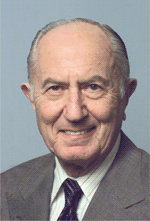
We are saddened by the passing of Donald W. Seldin, MD, on April 25 at age 97.

Dr. Seldin was an iconic figure in medicine and the very embodiment of what the ASCI represents. His dedication to the ASCI community rose to the level of legend. Since his election to the Society in 1960, he attended the annual meeting nearly without fail. He served as Councilor from 1961 to 1965, after which he was elected 1965-1966 President.

In his May 2, 1966, Presidential Address, “Some Reflections on the Role of Basic Research and Service in Clinical Departments,” Dr. Seldin noted,

“Investigation is by definition the search for truth, the discovery of new knowledge, the development of explanatory and predictive theories. If this were all, a University would be no different from a research institute. Clearly the University has the vital additional function of education. If investigation is progressively separated from clinical work and teaching, the educational process deteriorates. Only the investigator can inculcate the methods of critical inquiry acquired in research into the routine practice of medicine. Only he can bring physiology and biochemistry meaningfully to bear in the study and treatment of the sick.”

His comments came 14 years into his tenure as Chair of the UT Southwestern Department of Internal Medicine, a position he would hold for another 22 years until 1988. He had begun his UT Southwestern career in 1951, and for a time he was the lone person in the Department, within a medical school sited in a former Army barracks. From this inauspicious foundation, Dr. Seldin transformed UT Southwestern into one of the great institutions worldwide built by physician-scientist powerhouses.

In recent years, the ASCI honored Dr. Seldin and his contributions to the physician-scientist community by creating the Donald W. Seldin~Holly Smith Award for Pioneering Research. The Award connects the careers of these two physician-scientist luminaries with outstanding early-career physician-scientists, and we were fortunate that Dr. Seldin, along with his wife Dr. Ellen Taylor Seldin, was able to attend recent AAP/ASCI/APSA Joint Meetings to celebrate the next generation that the Seldin~Smith Award represents.

We’ve compiled a collection of photographs featuring Dr. Seldin and a video excerpt from his interview in the Journal of Clinical Investigation series “Conversations with Giants in Medicine.” While he leaves a legacy of tremendous accomplishments, he will also be remembered for his sharp wit.

With Dr. Seldin’s passing, his mantle of integrity, intellect, and dedication to academic medicine and the aspiring physician-scientist becomes all of ours to pick up and carry forward.

Kieren Marr, MD
2018-2019 President
On behalf of the ASCI Council

Mukesh K. Jain, MD
2014-2015 President
Chair, Seldin~Smith Award Selection Committee

Call for applicants, Editor Selection Committee

The ASCI is convening an Editor Selection Committee to identify and recommend a new Editor for JCI Insight, to succeed Howard Rockman, MD, whose term expires at the end of August 2019. The new Editor will serve a 5-year term, beginning September 1, 2019.

The Committee is, per the bylaws, constituted by members of the Publications Committee, which is presently as follows: Kieren Marr, W. Kimryn Rathmell, Lorraine Ware, Hossein Ardehali, Gordon Tomaselli, Howard Rockman, and Andrew Fontenot. Dr. Marr, who is the 2018-2019 ASCI President, will serve as Chair of the Committee.

The Committee seeks to fill two additional Committee seats and calls for applications from members. The Committee will become active in July 2018 and conclude its activity upon its recommendation of a candidate to the ASCI Council for consideration.

Members interested in serving must be available for an in-person meeting of the Committee on April 4, 2019 (in Chicago), when the Committee will interview finalists for Editor and determine its recommendation.

Applications consist of the following in a single PDF:

  • A summary (limit of 250 words) of the member’s research and training background
  • An explanation (limit of 500 words) of the member’s interest in and experience with editorial matters, and including comment about JCI Insight’s editorial focus
  • A full academic CV

Applications are due May 31, 2018, and must be sent via email to staff@the-asci.org. The committee will review applications and submit its recommended applicants to the Council for approval.

The ASCI’s 2018 Young Physician-Scientist Awards

The ASCI is pleased to recognize the 35 recipients of its 2018 Young Physician-Scientist Awards. The Awardees presented their work at the ASCI’s Food & Science Evening, on April 21, 2018, as part of the AAP/ASCI/APSA Joint Meeting, April 20-22, 2018.

Awardee Institution Abstract title
Ana Paula Abreu, MD, PhD Brigham and Women’s Hospital, Harvard Medical School MKRN3, a new player in the reproductive axis
Raag D. Airan, MD, PhD Stanford University Spatiotemporally precise and versatile noninvasive neuromodulation via focused ultrasonic drug uncaging
Francis J. Alenghat, MD, PhD University of Chicago Skap2 regulates atherosclerosis through macrophage polarization and efferocytosis
Vivek K. Arora, MD, PhD Washington University School of Medicine Bladder-cancer-associated mutations in RXRA activate peroxisome proliferator-activated receptors to drive urothelial proliferation
Megan T. Baldridge, MD, PhD Washington University School of Medicine Transferable microbiota factor stimulates resistance to norovirus infection in immunodeficient mice
Scott W. Canna, MD University of Pittsburgh/Children’s Hospital of Pittsburgh Dysregulation of interleukin-18 diagnostically distinguishes and pathogenically promotes macrophage activation syndrome
Brian Curran Capell, MD, PhD Perelman School of Medicine, University of Pennsylvania KMT2D regulates p63 target enhancers to coordinate epithelial homeostasis
Kevin J. Cheung, MD Fred Hutchinson Cancer Research Center Tumor cell clustering promotes breast cancer metastasis by increasing apoptosis resistance and cell proliferation
Silvia S. Chiang, MD Alpert Medical School of Brown University/ Hasbro Children’s Hospital/ Center for International Health Research Barriers to the diagnosis of childhood tuberculosis: a qualitative study
Janet Chou, MD Boston Children’s Hospital Leucine-rich repeat–containing 8A (LRRC8A) is essential for T cell activation by non-hematopoietic antigen-presenting cells
Louis Jared Cohen, MD, MS Icahn School of Medicine at Mount Sinai Bacterial modulation of human glycans in inflammatory bowel disease
Kimberley Jane Evason, MD, PhD Huntsman Cancer Institute and University of Utah Serotonin in zebrafish liver development and tumorigenesis
Jennifer E. Flythe, MD, MPH University of North Carolina-Chapel Hill Failed target weight achievement associates with short-term hospital encounters
Robert David Guzy, MD, PhD University of Chicago Fibroblast growth factor 2 decreases bleomycin-induced pulmonary fibrosis through inhibition of fibroblast collagen production
Andrew M. Intlekofer, MD, PhD Memorial Sloan Kettering Cancer Center Acquired clinical resistance to IDH inhibition through in trans IDH2 mutations
Prasanna Jagannathan, MD Stanford University Impact of dihydroartemisinin-piperaquine for intermittent preventive treatment of malaria during pregnancy on risk of malaria in early childhood
Benjamin Levi, MD University of Michigan Tuning inflammation to improve musculoskeletal wound healing through modification of monocyte/macrophage Tgfb1
Piro Lito, MD, PhD Memorial Sloan Kettering Cancer Center Modeling the evolution of resistance to ERK signaling inhibitors at the single cell level
Steven E. Mansoor, MD, PhD Knight Cardiovascular Institute, Oregon Health and Science University Mechanisms of P2X receptor activation, desensitization, and antagonism­­­­
Jonathan J. Miner, MD, PhD Washington University Mouse models of Zika virus pathogenesis
Zaman Mirzadeh, MD, PhD Barrow Neurological Institute Perineuronal net formation in the hypothalamic arcuate nucleus-median eminence corresponds with the end of the critical period for AgRP/NPY neuron maturation
Chiadi Ericson Ndumele, MD, PhD Johns Hopkins University The association of longitudinal changes in metabolic syndrome with incident heart failure: the Atherosclerosis Risk in Communities (ARIC) study
Esther A. Obeng, MD, PhD St. Jude Children’s Research Hospital The nonsense-mediated decay pathway is a therapeutic vulnerability in myelodysplastic syndromes
Michael Joseph Ombrello, MD National Institute of Arthritis and Musculoskeletal and Skin Diseases, NIH IL1RN variation is associated with systemic juvenile idiopathic arthritis and predicts non-response to anakinra treatment
Cevher Ozcan, MD University of Chicago Mitochondrial mechanism of atrial fibrillation and novel therapies for primary prevention of the disease process
James R. Priest, MD Stanford University School of Medicine Rare inherited variants confer substantial risk for congenital heart disease in a large British cohort
Jarrad M. Scarlett, MD, PhD University of Washington Diabetes remission induced by the central action of fibroblast growth factor 1
Chetan Shenoy, MBBS University of Minnesota Long-term outcomes after detection of left ventricular thrombus by late gadolinium enhancement cardiovascular magnetic resonance imaging
Neeraj K. Surana, MD, PhD Boston Children’s Hospital Moving beyond microbiome-wide associations to causal microbe identification
David B. Sykes, MD, PhD Massachusetts General Hospital DHODH inhibition as differentiation therapy for acute myeloid leukemia: understanding the metabolic therapeutic window
Viviany R. Taqueti, MD, MPH Brigham and Women’s Hospital Coronary microvascular dysfunction is a better discriminator of cardiovascular risk than body mass index in obese patients
Sarah Kathleen Tasian, MD Children’s Hospital of Philadelphia and University of Pennsylvania Essential JAK, SRC, and PI3K signaling pathways regulate cell survival in human Ph-like acute lymphoblastic leukemia
Kirk J. Wangensteen, MD, PhD University of Pennsylvania Perelman School of Medicine Novel combination therapy for hepatocellular carcinoma identified by genetic screening
Melissa Y. Yeung, MD Harvard Medical School / Brigham and Women’s Hospital Identifying key regulators of B cell–mediated transplant tolerance
Lilei Zhang, MD, PhD Baylor College of Medicine KLF15 regulates the circadian susceptibility to ischemia reperfusion injury in the heart

Best Poster Award recipients

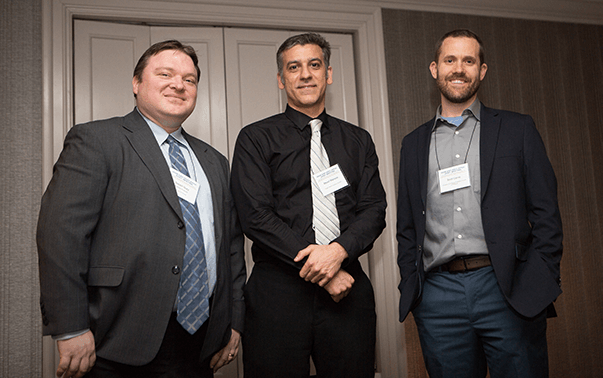
Each year, the ASCI recognizes three presenters with $1,000 Best Poster Awards. The 2018 Best Poster Award recipients are, from left, Drs. Guzy, Mansoor, and Canna.

Recipients of the 2018 Seldin~Smith Award for Pioneering Research: Anna Greka, MD, PhD, and Deepak Nijhawan, MD, PhD

Dr. Greka
Photo: Martin Adolfsson
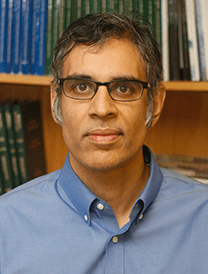
Dr. Nijhawan

The American Society for Clinical Investigation (ASCI) is pleased to announce the recipients of the 2018 Donald Seldin~Holly Smith Award for Pioneering Research: Anna Greka, MD, PhD, and Deepak Nijhawan, MD, PhD.

Dr. Greka focuses on developing targeted treatments for kidney diseases, where there has been virtually no progress in the last 40 years. Her laboratory studies kidney podocytes, critical blood-filtering cells whose loss is responsible for progression to kidney failure. In 2013, Dr. Greka’s group identified TRPC5 as an important mediator of podocyte injury. In 2017, her team developed AC1903, a TRPC5-specific blocker, which protected podocytes from death and suppressed disease progression in multiple animal models of kidney disease. This discovery has formed the basis for precision therapies for kidney diseases, now in active development. Dr. Elizabeth Nabel, President of Brigham Health, who nominated Dr. Greka for this recognition, wrote that this latest work “has launched precision medicine for kidney disease — a long-awaited day in the field of nephrology.” Dr. Greka’s nomination was supported by Dr. Eric S. Lander, President and Founding Director of the Broad Institute of MIT and Harvard.

Dr. Nijhawan focuses on identifying targets for cancer treatment. In particular, his laboratory has investigated indisulam and CD437, identified as anticancer agents in the 1990s but not subsequently developed because their targets were poorly understood. In 2016, Dr. Nijhawan’s laboratory identified the target of CD437, followed in 2017 by identification of the target of indisulam and of cancer-cell variants most susceptible to its effects. This has created new interest in these agents, which are now in active development in collaboration with Dr. Nijhawan’s team. Dr. Steven L. McKnight, Distinguished Chair in Basic Biomedical Research at UT Southwestern, nominated Dr. Nijhawan. “These discoveries, I predict, constitute the most promising avenue of any for biomedical research to achieve the discovery of entirely new therapeutics over the upcoming decade,” he wrote. His nomination was supported by Dr. William G. Kaelin Jr., Howard Hughes Medical Institute Investigator and Professor of Medicine, Harvard Medical School.

Dr. Greka is currently Assistant Professor at Harvard Medical School; Institute Member at the Broad Institute of MIT and Harvard; and an Associate Physician at Brigham and Women’s Hospital (BWH), where she joined the faculty in 2012. She received her MD/PhD in 2004 from Harvard Medical School, followed by a residency in internal medicine at Massachusetts General Hospital (MGH, 2007) and a fellowship in nephrology at MGH and BWH (2009). Her work has been supported in part by the National Institute of Diabetes and Digestive and Kidney Diseases. She was a 2014 recipient of an ASCI Young Physician-Scientist Award and was elected to the ASCI in 2017.

Dr. Nijhawan is currently Assistant Professor in the Departments of Biochemistry and Hematology and Oncology at UT Southwestern Medical Center, where he joined the faculty in 2012. He received his MD/PhD in 2005 from UT Southwestern, followed by an internship and residency in internal medicine at MGH (2007) and a fellowship in medical oncology at the Dana-Farber Cancer Institute (2011). His work has been supported in part by the Sass Foundation for Medical Research, Damon Runyon Cancer Research Foundation, Harrington Discovery Institute, and the National Cancer Institute.

In addition to sharing an unrestricted award of $30,000 to advance their academic efforts, Drs. Greka and Nijhawan will be recognized on April 21, 2018, as part of the AAP/ASCI/APSA Joint Meeting (April 20-22), and they will deliver scientific talks at the 2019 Joint Meeting.

The Seldin~Smith Award, now in its third year, began with the goal of connecting the legacies of two iconic figures in medicine — Donald Seldin (UT Southwestern) and Lloyd “Holly” Smith Jr. (University of California, San Francisco) — with exceptionally creative early-career physician-scientists. The ASCI is grateful to Drs. Seldin and Smith, who provided the inspiration for this Award through their storied careers of developing generations of outstanding physician-scientists, and to the donors who have made the program possible.

Nominations were evaluated by a Selection Committee of current and former ASCI presidents: Mukesh K. Jain (Chair), Vivian G. Cheung, Charles L. Sawyers, Elizabeth M. McNally, and Stuart H. Orkin. Finalists were evaluated by an Advisory Committee comprising five physician-scientist luminaries: Joseph L. Goldstein (Chair), Michael S. Brown, Arthur Weiss, Stanley B. Prusiner, and Robert J. Lefkowitz.

The Seldin~Smith Award complements two prestigious ASCI awards (the Stanley J. Korsmeyer Award and the ASCI / Harrington Prize for Innovation in Medicine) that recognize senior physician-scientists who have made major contributions to science, mentorship, and translation of discovery to clinical impact.

Celebrating 20 years of the Stanley J. Korsmeyer Award

This year, the ASCI is celebrating the 20th anniversary of the Stanley J. Korsmeyer Award, which has become a beacon of excellence by celebrating key discoveries made by physician-scientists who are also passionate about mentoring.

At the upcoming Joint Meeting, on Friday, April 20, 5 to 5:30 p.m., the ASCI will recognize Dr. Joseph Heitman as the 2018 Korsmeyer Award recipient. His presentation for the Korsmeyer Lecture is “Natural product drug targets are conserved from model and pathogenic yeasts to humans.”

Also on Friday, April 20, Benjamin L. Ebert, MD, PhD, the 2017-2018 ASCI President, will host his President’s Reception from 6 to 7:15 p.m. in honor of this milestone for the Korsmeyer Award. The reception will feature introductory remarks from Dr. Ebert followed by reminiscences from:

  • Susan Korsmeyer, Dr. Korsmeyer’s widow and a staunch advocate for the Award and its legacy
  • Scott A. Armstrong, MD, PhD, a former trainee of Dr. Korsmeyer and currently Chair of the Department of Pediatric Oncology at the Dana-Farber Cancer Institute
  • Timothy J. Ley, MD, a former colleague of Dr. Korsmeyer and currently Associate Director for Cancer Genomics, The Genome Institute, Washington University, St. Louis

In connection with celebrating the significant history of the Award and recognizing Dr. Korsmeyer, the ASCI is seeking the support of the physician-scientist community to sustain the Award’s legacy. Your gift to the Korsmeyer Award Fund, which will be restricted to the Award, will highlight your commitment to this critical recognition and the impact it has had, and will continue to have, on the physician-scientist community.

It is an honor for me to join Susan Korsmeyer and Carnell Korsmeyer (Dr. Korsmeyer’s mother) in a combined Visionary donation toward the fund. I am pleased to recognize other initial donors: Louis J. Ptáček, MD (2015 Award recipient), James E. Crowe Jr., MD (2017 Award recipient), and Kieren Marr, MD (Chair, ASCI Development Committee).

I hope that you will be able to join us in celebrating the Stanley J. Korsmeyer Award and its legacy:

https://www.the-asci.org/awards/korsmeyer/k20

As ever, thank you for your time.

John B. Hawley
Executive Director
The American Society for Clinical Investigation

2018 omnibus appropriations: great news for research funding

Dear ASCI member,

A part of our mission as a community of physician-scientists is to advocate for medical research and for measures that sustain the pipeline of young physicians to engage in research careers. In 2017, we formed an Advocacy Committee to work more closely with FASEB and Research!America, our advocacy partner organizations. Member Alp Ikizler serves as a member of FASEB’s Board of Directors, Council member Donna Martin serves on FASEB’s Science Policy Committee, and I serve as a liaison to the FASEB Board of Directors.

Earlier this spring, Donna Martin was the ASCI representative attending FASEB’s Capitol Hill Day, meeting with representatives to convey the value of investment in the U.S. research infrastructure.

FASEB staff have agreed to work with us to generate timely updates about the activities on Capitol Hill of value to ASCI members. Following is brief detail regarding the passage of the FY 2018 omnibus appropriations bill:

At 12:21 am Friday the Senate passed the fiscal year (FY) 2018 omnibus appropriations bill by a vote of 65-32. President Trump signed the bill into law Friday afternoon. Although it could take another 30 days for the new funds to be made available to the federal agencies, we can officially celebrate the $3 billion increase for NIH, $295 million increase for NSF, $868 million increase for DOE SC, $47 million increase for veterans research, and $25 million increase for competitive agriculture research.

Please see FASEB’s summary (PDF) for more information.

Look out for more information to come.

W. Kimryn Rathmell, MD, PhD
Chair, Advocacy Committee
The American Society for Clinical Investigation
www.the-asci.org
Follow us on Twitter: www.twitter.com/the_asci

The 2018 Harrington Prize for Innovation in Medicine: Helen H. Hobbs, MD

2018 Harrington Prize awarded to Dr. Helen Hobbs, University of Texas Southwestern Medical Center, for her advancements in biomedical science

The fifth annual Harrington Prize for Innovation in Medicine has been awarded to Helen H. Hobbs, MD, investigator of the Howard Hughes Medical Institute and Professor of Internal Medicine and Molecular Genetics at the University of Texas Southwestern Medical Center.

The Harrington Prize for Innovation in Medicine, established in 2014 by the Harrington Discovery Institute at University Hospitals (UH) in Cleveland, Ohio, and The American Society for Clinical Investigation (ASCI), honors physician-scientists who have moved science forward with achievements notable for innovation, creativity, and potential for clinical application.

Dr. Hobbs is being recognized for her outstanding contributions to medicine and science. Her discovery of the link between a gene mutation (PCSK9) and lower levels of LDL, or “bad cholesterol,” is considered a major breakthrough and has improved the treatment of high cholesterol. Dr. Hobbs made the discovery when she sequenced the PCSK9 gene in subjects from a population-based study of 3,500 residents of Dallas County, Texas. She found that subjects with this particular mutation not only had lower LDL levels, but also had an 88% lower incidence of heart attacks as compared with the controls in the study. The discovery of this critical link has enabled the development of therapeutics that can effectively target the gene in order to lower LDL and the risk of heart attack.

“Dr. Hobbs’ research has had a profound impact on human health,” said Benjamin Ebert, MD, PhD, Chair of Medical Oncology at the Dana-Farber Cancer Institute, Professor of Medicine at Harvard Medical School, and 2017-2018 President of the ASCI. “Her ground-breaking discovery of PCSK9’s connection to cholesterol has led to the development of an FDA-approved therapy within 10 years, which is a remarkable achievement.”

A committee composed of members of the ASCI Council and the Harrington Discovery Institute Scientific Advisory Board reviewed nominations from leading academic medical centers from three countries before selecting the 2018 recipient.

“We are pleased to join with the ASCI to honor Dr. Hobbs for her pioneering studies in human genetics that have advanced the standard of care,” said Jonathan Stamler, MD, President of the Harrington Discovery Institute and the Robert S. and Sylvia K. Reitman Family Foundation Distinguished Chair in Cardiovascular Innovation at UH Cleveland Medical Center and Case Western Reserve University School of Medicine. “Her superb work clearly exemplifies the guiding principles of The Harrington Prize, which recognizes the most innovative and creative investigators to have impacted patients’ lives.”

In addition to receiving a $20,000 honorarium, Dr. Hobbs will deliver the Harrington Prize Lecture at the 2018 AAP/ASCI/APSA Joint Meeting on April 20, 2018, and publish an essay in the Journal of Clinical Investigation.

Dr. Hobbs, Director of the Eugene McDermott Center for Human Growth and Development, received her MD from Case Western Reserve University in 1979. She is currently Director of the Dallas Heart Study, a longitudinal, multiethnic, population-based study of Dallas County in Texas. Dr. Hobbs holds the Eugene McDermott Distinguished Chair for the Study of Human Growth and Development, Philip O’Bryan Montgomery, Jr., M.D. Distinguished Chair in Developmental Biology, and the 1995 Dallas Heart Ball Chair in Cardiology Research.

The first recipient of The Harrington Prize for Innovation in Medicine, in 2014, was Dr. Harry Dietz (Johns Hopkins University School of Medicine, USA), a pediatric cardiologist and genetics researcher, for his contributions to the understanding of the biology and treatment of Marfan syndrome, a disorder leading to deadly aneurysms in children and adults. The 2015 recipient was Douglas R. Lowy, MD, Chief, Laboratory of Cellular Oncology (The National Cancer Institute, USA), in recognition of his discoveries that led to the development of the Human Papillomavirus (HPV) vaccine to prevent cervical cancer. The 2016 recipient was Jeffrey M. Friedman, MD, PhD (The Rockefeller University, USA), for his discovery of leptin, which controls feeding behavior and is used to treat related clinical disorders. In 2017, the Prize was awarded jointly to Daniel J. Drucker, MD (Mount Sinai Hospital, Canada), Joel F. Habener, MD (Massachusetts General Hospital, USA) and Jens J. Holst, MD, DMSc (University of Copenhagen, Denmark) for their discovery of incretin hormones and for the translation of these findings into transformative therapies for major metabolic diseases such as diabetes.

Harrington Discovery Institute

The Harrington Discovery Institute at University Hospitals in Cleveland, OH – part of The Harrington Project for Discovery & Development – aims to advance medicine and society by enabling our nation’s most inventive scientists to turn their discoveries into medicines that improve human health. The institute was created in 2012 with a $50 million founding gift from the Harrington family and instantiates the commitment they share with University Hospitals to a Vision for a ‘Better World’.

The Harrington Project for Discovery & Development

The Harrington Project for Discovery & Development (The Harrington Project), founded in late February 2012 by the Harrington Family and University Hospitals of Cleveland, is a $300 million national initiative built to bridge the translational valley of death. It includes the Harrington Discovery Institute and BioMotiv, a for-profit, mission-aligned drug development company that accelerates early discovery into pharma pipelines.

For more information about The Harrington Project and the Harrington Discovery Institute, visit: HarringtonDiscovery.org.

University Hospitals

Founded in 1866, University Hospitals serves the needs of patients through an integrated network of 18 hospitals, more than 40 outpatient health centers and 200 physician offices in 15 counties throughout northern Ohio. The system’s flagship academic medical center, University Hospitals Cleveland Medical Center, located on a 35-acre campus in Cleveland’s University Circle, is affiliated with Case Western Reserve University School of Medicine. The main campus also includes University Hospitals Rainbow Babies & Children’s Hospital, ranked among the top children’s hospitals in the nation; University Hospitals MacDonald Women’s Hospital, Ohio’s only hospital for women; and University Hospitals Seidman Cancer Center, part of the NCI-designated Case Comprehensive Cancer Center. UH is home to some of the most prestigious clinical and research programs in the nation, including cancer, pediatrics, women’s health, orthopedics, radiology, neuroscience, cardiology and cardiovascular surgery, digestive health, transplantation and urology. UH Cleveland Medical Center is perennially among the highest performers in national ranking surveys, including “America’s Best Hospitals” from U.S. News & World Report. UH is also home to Harrington Discovery Institute at University Hospitals – part of The Harrington Project for Discovery & Development. UH is one of the largest employers in Northeast Ohio with 26,000 employees.

UH’s vision is “Advancing the science of health and the art of compassion,” and its mission: “To Heal. To Teach. To Discover.” Follow UH on Facebook @UniversityHospitals and Twitter @UHhospitals. For more information, go to UHhospitals.org.