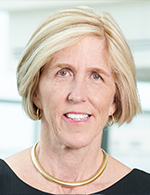
The 2018 Stanley J. Korsmeyer Award: Joseph Heitman, MD, PhD

Joseph Heitman, MD, PhD, is the recipient of the 2018 American Society for Clinical Investigation’s (ASCI) Stanley J. Korsmeyer Award for his key contributions to our understanding of how eukaryotic microbial pathogens evolve, cause disease, and develop drug resistance; and his discovery of TOR and FKBP12 as targets of the immunosuppressive chemotherapeutic drug rapamycin.

Dr. Heitman received BS and MS degrees from the University of Chicago in 1984, his PhD from Rockefeller University in 1989, and his MD from Cornell University in 1992. From 1989 to 1991, he was a European Molecular Biology Organization postdoctoral fellow at the University of Basel’s Biozentrum, in the laboratory of Michael N. Hall.

Rapamycin was first isolated from the bacterium Streptomyces hygroscopicus in the early 1970s from Easter Island soil samples collected in the 1960s, in a hunt for microbes that might provide the basis for new drugs. Although rapamycin was first developed as an antifungal agent, it was found to be a powerful suppressor of the immune system and was effectively abandoned for a time. However, researchers subsequently took up the immunosuppressive qualities of rapamycin and other drugs to transform the field of organ transplantation by making recipients less susceptible to rejecting their transplants. In addition, rapamycin was found to hinder cell growth, opening its use in the treatment of cancer and in the prevention of restenosis of coronary artery stents.

As a fellow in Dr. Hall’s laboratory, Dr. Heitman focused on the mechanism of action of rapamycin and two other immunosuppressive drugs, cyclosporin A and FK506 (tacrolimus), using Baker’s yeast, Saccharomyces cerevisiae, to study the drugs’ activity. In collaboration with Rao Movva, a scientist at Sandoz Pharmaceuticals in Basel, the researchers found that rapamycin arrested yeast cell growth in a manner similar to how it arrested growth in human T- cells, supporting the idea that the drug target was the same in both yeast and human. Their isolation and analysis of drug-resistant yeast mutants led to the discovery of FKBP12 and TOR as the targets of rapamycin. Further studies revealed the TOR pathway functions to sense nutrients and govern appropriate cellular physiological responses.

Subsequently, Dr. Heitman’s research in infectious disease has defined molecular virulence determinants and revealed novel modes of sexual reproduction and drug resistance for eukaryotic pathogenic microbes. The phosphatase calcineurin (the target of cyclosporin A and FK506) was identified as a key virulence determinant conserved across human fungal pathogens, and ongoing studies are exploring new therapeutic leads. He discovered that pathogenic microbes undergo unisexual reproduction, and has studied its impact on the evolution of eukaryotic microbial pathogens and how sexual reproduction may have originally evolved. Recent studies have unveiled novel mechanisms of antimicrobial drug resistance involving epimutations that silence drug-target genes via RNAi. Beyond his own laboratory, Dr. Heitman has provided resources and insights to advance the field of fungal genetics and genomics.

Dr. Heitman has mentored numerous undergraduates, medical students, graduate students, and postdoctoral and medical fellows, many of whom have developed independent careers in medicine and basic biomedical research. Among many others, John Perfect, Andrew Alspaugh, and William Steinbach have been key collaborators in studies on fungal pathogenesis and therapeutic exploration.

Dr. Heitman’s work has been recognized by the Gustavo Cudkowicz Memorial Prize in Immunobiology, 1991; the American Society for Biochemistry and Molecular Biology’s AMGEN Award, for significant achievements in the understanding of human disease involving studies in model yeasts defining targets and modes of action for immunosuppressive drugs, 2002; the Infectious Diseases Society of America’s Squibb Award, in recognition of outstanding achievement in the field of infectious diseases, in 2003; and a National Institutes of Health / National Institute of Allergy and Infectious Diseases MERIT award for studies on unisexual reproduction of eukaryotic microbial pathogens, 2011-2021.

Dr. Heitman is an elected fellow of the Infectious Diseases Society of America (2003), the ASCI (2003), the American Academy of Microbiology (2004), the American Association for the Advancement of Science (2004), and the Association of American Physicians (2006).

Dr. Heitman joined the faculty at Duke University School of Medicine in 1992, was named a James B. Duke Professor in 2004, and appointed Chair of the Department of Molecular Genetics and Microbiology in 2009. He was an investigator of the Howard Hughes Medical Institute from 1992 to 2005 and a Burroughs-Wellcome Scholar in Molecular Pathogenic Mycology from 1998 to 2005. He has given prominent lectures, including the American Society for Microbiology Division F Lecture (2009), the Foundation Lecture for the British Society for Medical Mycology (2010), the Karling Lecture for the Mycological Society of America (2011), and the Max Delbrück Lecture for the German Genetics Society (2017); is an editor of PLOS Genetics, mBio, PLOS Pathogens, and Fungal Genetics and Biology; and has edited seven textbooks on fungal pathogens, evolution of eukaryotic microbial pathogens, genetics, and microbiology.

Message from the President

The Council recently asked the Active membership to vote on its recommendations for 2018 new members and proposed changes to the ASCI bylaws. I am pleased to write that the vote was overwhelmingly in favor of both.

The ASCI will welcome 78 new members at the upcoming AAP/ASCI/APSA Joint Meeting, April 20-22 at the Fairmont Chicago. We’ll be profiling some of our new members in the run-up to the meeting, and you can see the full list of those joining the ASCI here.

Registration for the meeting is open, and I encourage you to attend this year to experience great science, to support and mentor young physician-scientists across the career spectrum, and to connect with your colleagues.

The changes to the bylaws were focused on the Society’s publishing efforts. With these changes, the ASCI bylaws now specifically enumerate Publications and Editor Selection Committees, and they describe JCI Insight, now in its third year of publication.

Dr. Howard Rockman will remain as JCI Insight Editor through August 2019. In the coming months, the Publications Committee will be defining the application process for the next JCI Insight Editor, who will serve a five-year term beginning September 2019.

I would like to use this opportunity to thank those who contributed to the ASCI’s 2017 annual appeal, the first time the ASCI has undertaken such an effort, and to those who contributed to specific programs throughout 2017.

Beyond being grateful for this support, I am thankful for the passion and energy each of you contribute to the ASCI and the physician-scientist community in so many other ways.

I look forward to seeing you in Chicago in April.

Sincerely,


Benjamin L. Ebert, MD, PhD
2017-2018 President
The American Society for Clinical Investigation

New members, 2018

The ASCI is pleased to recognize the following 78 physician-scientists who were officially inducted into the Society at the ASCI Dinner & New Member Induction Ceremony, April 20, 2018, as part of the AAP/ASCI/APSA Joint Meeting in Chicago.

Name Institution
Omar I. Abdel-Wahab, MD Memorial Sloan Kettering Cancer Center
Prasad S. Adusumilli, MD Memorial Sloan Kettering Cancer Center
Michael S.D. Agus, MD Harvard Medical School, Boston Children’s Hospital
Susanne E. Ahmari, MD, PhD University of Pittsburgh Medical Center
Gregory T. Armstrong, MD, MSCE St. Jude Children’s Research Hospital
Jodie L. Babitt, MD Harvard Medical School, Massachusetts General Hospital
Rebecca Marlene Baron, MD Harvard Medical School, Brigham & Women’s Hospital
Ethan Martin Basch, MD, MPhil, MSc University of North Carolina at Chapel Hill
Murat Bastepe, MD, PhD Harvard Medical School, Massachusetts General Hospital
Sudha B. Biddinger, MD, PhD Harvard Medical School, Boston Children’s Hospital
Alessandra Biffi, MD Harvard Medical School, Boston Children’s Hospital
Paul Laszlo Bollyky, MD, PhD Stanford University School of Medicine
David T. Breault, MD, PhD Harvard Medical School, Boston Children’s Hospital
Kathleen H. Burns, MD, PhD Johns Hopkins University School of Medicine
Yu Chen, MD, PhD Memorial Sloan Kettering Cancer Center
Sharlene M. Day, MD University of Michigan Medical School
Arjun Deb, MD University of California, Los Angeles, David Geffen School of Medicine
Ian Harm de Boer, MD, MS University of Washington School of Medicine
Joshua C. Denny, MD, MS Vanderbilt University School of Medicine
Luis A. Diaz, Jr., MD Memorial Sloan Kettering Cancer Center
Jeremy S. Dittman, MD, PhD Weill Cornell Medical College
Abhinav Diwan, MBBS Washington University School of Medicine in St. Louis
Robert C. Doebele, MD, PhD University of Colorado School of Medicine
Alexandre Y. Dombrovski, MD University of Pittsburgh School of Medicine
XinQi Dong, MD, MPH Rutgers University, The State University of New Jersey
Oliver Eickelberg, MD University of Colorado School of Medicine
Marni Joy Falk, MD University of Pennsylvania School of Medicine
Matthew Scott Freiberg, MD, MSc Vanderbilt University School of Medicine
Jennifer F. Friedman, MD, PhD, MPH Brown University Medical School
Daniel M. Greif, MD Yale School of Medicine
Jan Grimm, MD, PhD Memorial Sloan Kettering Cancer Center
Cary P. Gross, MD Yale School of Medicine
Saptarsi M. Haldar, MD University of California, San Francisco, School of Medicine
Megan R. Haymart, MD University of Michigan Medical School
Maureen Renee Horton, MD Johns Hopkins University School of Medicine
Leora I. Horwitz, MD, MHS New York University School of Medicine
Yujin Hoshida, MD, PhD Icahn School of Medicine at Mount Sinai
Susan S. Huang, MD, MPH University of California, Irvine, School of Medicine
Arti Hurria, MD City of Hope Medical Center
Theodore (Jack) Iwashyna, MD, PhD University of Michigan Medical School
Antonio Jimeno, MD, PhD University of Colorado Health Sciences Center
Daniel H. Kaplan, MD, PhD University of Pittsburgh School of Medicine
Keith S. Kaye, MD, MPH University of Michigan Medical School
Alex Kentsis, MD, PhD Memorial Sloan Kettering Cancer Center
Young J. Kim, MD, PhD Vanderbilt University School of Medicine
Rahul M. Kohli, MD, PhD University of Pennsylvania School of Medicine
Suneil K. Koliwad, MD, PhD University of California, San Francisco, School of Medicine
Margot Beth Kushel, MD University of California, San Francisco, School of Medicine
Bonnie Ky, MD, MSCE University of Pennsylvania School of Medicine
Maciej S. Lesniak, MD, MHCM Northwestern University Feinberg School of Medicine
Jonathan H. Lin, MD, PhD University of California, San Diego, School of Medicine
Nehal N. Mehta, MD, MSCE NIH, National Heart, Lung, and Blood Institute
Lloyd S. Miller, MD, PhD Johns Hopkins University School of Medicine
Ann Mullally, MD Harvard Medical School, Brigham & Women’s Hospital
Peter A. Nigrovic, MD Harvard Medical School
John Erik Pandolfino, MD, MSCI Northwestern University Feinberg School of Medicine
Eirini P. Papapetrou, MD, PhD Icahn School of Medicine at Mount Sinai
Chirag R. Parikh, MD, PhD Yale School of Medicine
Ben Ho Park, MD, PhD Johns Hopkins University School of Medicine
Sachin Patel, MD, PhD Vanderbilt University School of Medicine
Ganesh V. Raj, MD, PhD University of Texas Southwestern Medical Center
Rajat Rohatgi, MD, PhD Stanford University School of Medicine
Matthew R. Rosengart, MD, MPH University of Pittsburgh School of Medicine
Joseph Solomon Ross, MD, MHS Yale School of Medicine
Vijay Sankaran, MD, PhD Harvard Medical School, Boston Children’s Hospital
Simone Sanna-Cherchi, MD Columbia University College of Physicians & Surgeons
Padmanee Sharma, MD, PhD University of Texas M.D. Anderson Cancer Center
Donald C. Sheppard, MD McGill University Faculty of Medicine
Brad Spellberg, MD University of Southern California Keck School of Medicine
Charlotte J. Sumner, MD Johns Hopkins University School of Medicine
David T. Teachey, MD Children’s Hospital of Philadelphia
Amal N Trivedi, MD, MPH Brown University Medical School
Minang Mintu Turakhia, MD, MAS Stanford University School of Medicine
Cameron J. Turtle, MBBS, PhD Fred Hutchinson Cancer Research Center
John S. Welch, MD, PhD Washington University School of Medicine in St. Louis
Robert B. West, MD, PhD Stanford University School of Medicine
Paul B. Yu, MD, PhD Harvard Medical School, Brigham & Women’s Hospital
Kareem A. Zaghloul, MD, PhD NIH, National Institute of Neurological Disorders and Stroke

Call for Council nominations, 2018

The Society is seeking nominations for the following vacancies on the ASCI Council (all terms begin and end in the spring): Vice President (4-year term, 2018-2022), Secretary-Treasurer-elect (3-year term, 2018-2021, with the first year served as a regular Councilor), and Councilor (3-year term, 2018-2021).

All Council members are expected to support the activities of and attend the ASCI annual meeting, and to participate in the general governance of the Society, including two in-person meetings (fall and spring, coordinate with the annual meeting), and conference calls (typically every other month). All Council members participate in the review of membership nominations.

The Vice President transitions to President-Elect in year 2 and President in year 3. For the 2nd through 4th years of this position, this member is expected to participate significantly in matters related to the Joint Meeting. In the Presidential year (year 3), the member convenes a face-to-face Council meeting and oversees related review processes for nominations, notably including those to membership. The President works closely with the Association of American Physicians to create the annual meeting program, and the member presents the traditional Presidential Address at the meeting. In year 4, the President transitions to Immediate Past President, serving as an advisor to the current President and with full Council responsibilities and privileges.

The Council is supported by an Executive Director, Managing Director, and other staff members who oversee the day-to-day operations of the Society and effect initiatives as directed by the Council. For details on Officers and Councilors, see the ASCI Bylaws.

Members who will be 55 or younger in 2021 are eligible for nomination. The Society encourages you to keep under consideration the importance of diversity among the Council. Nominations may be submitted online through January 17, 2018, at 11:59 PM EST and consist of a 250-word summary of accomplishments accompanied by an NIH-style brief biosketch (PDF only). If the nomination is intended for a specific vacancy, note this in the nomination comments.

Members must submit nominations through their member accounts. (Please note: Self-nomination is no longer available for Council nominations.)

Call for abstracts: 2018 AAP/ASCI/APSA Joint Meeting

Limited Travel Awards Available — Submit an abstract and apply.

DEADLINE: Wednesday, December 13, 2017, 12:00 Midnight EST

A great opportunity for students and others in the physician-scientist career path

The Association of American Physicians, the American Society for Clinical Investigation, and the American Physician-Scientists Association are pleased to announce this Call for Abstracts for presentation at the 2018 AAP/ASCI/APSA Joint Meeting, April 20-22, 2018, in Chicago, IL. This meeting provides fantastic exposure to leaders in academic medicine and industry. The Joint Meeting keynote speakers will focus on two thematic areas: Human Genetics and Healthy Longevity. Please forward this email to interested colleagues.

The vast majority of poster presenters are students in the physician-scientist career path (MD/PhD programs or MD students in a research year) or early career physician-scientists. Work presented spans the range of medical specialties and biomedicine. While other research areas may be accepted for presentation, they do not represent the majority of the presenter demographic.

Review the following before submitting an abstract:

  • There is no submission fee.
  • The abstract must conform to the Abstract Style and Formatting Guidelines.
  • Do not include any figures, tables, or references in your abstract.
  • Only one abstract submission is allowed per presenter.
  • During the submission process, you will be asked to affirm the following:
    • You have disclosed in the abstract any potential conflicts of interest.
    • The abstract has not been published previously.
    • If the abstract is accepted, an eligible author is prepared to present it.
    • Any animal studies conform with the Guiding Principles in the Care and Use of Animals of the American Physiological Society.
    • Any human experimentation was conducted according to a protocol approved by an Institutional Review Board on ethics of human investigation
  • Submitted abstracts will be confirmed to presenting authors by email.
  • Abstracts that are incomplete as of the deadline will not be considered.
  • No submissions after the deadline will be considered.

The Joint Meeting offers a $750 Travel Award to select submitters. Check this option during submission if you wish to be considered. Preference is given to submitters outside the Chicago area.

Oral presentation: There will be a small number of top scoring abstracts chosen for an oral presentation on Saturday, April 21. Presenters selected must be available Saturday to present their work.

We also offer competitive $1,000 Best Poster Awards, given on the basis of scientific novelty, quality, and clarity of presentation.

Click here to submit an abstract for the 2018 AAP/ASCI/APSA Joint Meeting

POSTER SESSION SCHEDULE

Friday, April 20
1:00 pm – 3:00 pm: Poster Setup
6:15 pm – 9:30 pm: Informal Viewing presenters do not need to be at poster

Saturday, April 21: Two Poster Presentation Sessions
8:00 am – 9:00 am: Poster Session
11:45 am – 1:30 pm: Poster Session

  • Poster submitters are required to be at their posters on Saturday at the appointed poster presentation session.
  • Posters must be dismantled on Saturday, April 21, 1:30 pm – 2:00 pm.
  • Presentation of Best Poster Awards will be during the Saturday, April 21, Dessert Reception, 9:45 pm – 11:30 pm.

If you have any questions please contact Angie Spearman at 858-774-4503 or email aspearman@hpnglobal.com.

The AAP/ASCI/APSA look forward to receiving your submission!

2017 Annual Appeal

As the end of a busy year approaches, we at the American Society for Clinical Investigation hope to share with you our enthusiasm about and commitment to encouraging and recognizing excellence within the physician-scientist community.

Over the past several months, the ASCI has been increasing efforts to raise awareness of and financial support for ASCI programs designed to assist physician-scientists on their career paths. We hope you will consider joining these efforts and make a contribution today.

The ASCI has established a program for every stage in a physician-scientist’s career – Early Career Path Development (Medical Fellows Initiative); Early Career Recognition (Young Physician-Scientist Awards and the Donald Seldin~Holly Smith Award for Pioneering Research); and Career Recognition (the Stanley J. Korsmeyer Award and the ASCI/Harrington Prize for Innovation in Medicine). We are continually looking to build on these programs, which requires funding beyond what we can achieve through member dues.

Early Career Path Development. The Medical Fellows Initiative brought many bright young scientists to the Joint Meeting this past April. It is encouraging to witness their enthusiasm in presenting their work and gaining exposure to the ASCI and its members. The Medical Fellows Initiative provides career panels and mentor workshops for these students, giving them valuable information and support as they plan their careers. The ASCI’s goal is to encourage these fellows to pursue careers that combine patient care and research, with a focus on excellence that we hope will lead them to ASCI membership.

The ASCI’s Young Physician-Scientists Awards brought many early-career faculty members to the meeting to present their research; the awardees are rising stars in the field, and indeed potential ASCI members. We must do all we can to encourage these young colleagues.

Early Career Recognition. The Donald Seldin~Holly Smith Award for Pioneering Research realized its inaugural year, culminating in a talk by the first awardee, Christian P. Schaaf, MD, PhD, and recognition of the second award recipient, Omar Abdel-Wahab, MD, at the 2017 Joint Meeting. Each year, the Seldin~Smith Award provides meaningful financial support to a promising young physician-scientist during a career period when there can be a dearth of support. Over time, we envision that the Award will create a network of engaged physician-scientists to carry on the legacies of Drs. Seldin and Smith in mentoring and fostering scientific excellence.

Career Recognition. This coming year marks the 20th anniversary of the Stanley J. Korsmeyer Award: two decades of celebrating excellence across a spectrum of science. The Harrington Prize, a collaboration between the ASCI and the Harrington Discovery Institute, will recognize its 5th recipient this coming year. Through these programs, we are excited to continue celebrating the extraordinary work of physician-scientists.

We know that the obstacles to becoming a physician-scientist are many, and that great fortitude is needed to excel on this path. With your help, we endeavor to help our scientific family members to attain excellence at every stage in their careers. Join us on the path today to support and encourage excellence within the physician-scientist community.

Sincerely,


Benjamin L. Ebert, MD, PhD
2017-2018 President
The American Society for Clinical Investigation


Kieren Marr, MD
2017-2018 President-Elect
The American Society for Clinical Investigation

Call for nominations: 2018 Young Physician-Scientist Awards

The American Society for Clinical Investigation is pleased to call for nominations for the ASCI’s 2018 Young Physician-Scientist Awards. This is an excellent opportunity for a young faculty member to be recognized at the 2018 Joint Meeting.

The ASCI seeks nominations of outstanding physician-scientists who have recently received their first faculty appointment (preferably in the last 5 years).

Nominees must be funded by a current NIH K or equivalent career-development award (in or outside the United States). However, we welcome nominations of NIH intramural physician-scientists on the basis of their appointment only.

Those selected for this Awards program will:

  • receive a $500 travel award to attend the 2018 Joint Meeting, April 20-22, at the Fairmont Chicago
  • attend the invitation-only ASCI President’s Reception on Friday, April 20
  • present their work at the ASCI’s Food & Science Evening, Saturday, April 21

The following materials are required for nominations:

Nominations must be submitted by ASCI members, through their member accounts, by the extended deadline of January 12, 2018, at 11:59 pm, U.S. Eastern. Up to 40 Awards will be given for 2018.

JCI Editor’s update: November 2017

I am pleased to be providing this first ASCI member update on Journal activity since my tenure as Editor of the Journal of Clinical Investigation began on July 1. It is an honor for me, along with the distinguished JCI Editorial Board based at Johns Hopkins University, to serve the ASCI in publishing the best research across biomedicine.

A byword for the Board is flexibility, providing a venue for a variety of cutting-edge stories to be told. Starting November 1, authors will be able to publish in the JCI’s Concise Communication category, a flexible format for brief, elegant, and captivating scientific pieces. Submissions in this category, which replaces Brief Reports, have a higher word limit of 4,000 and more liberal treatment of display items. I encourage you to use this category to submit your definitive but short-form papers. For details, see my recent Editorial.

In its Research and Clinical Medicine categories, the JCI continues to be a home to full-story science. The recommended length for these submissions is 9,000 words (maximum 12,000). JCI submission types are described in detail here.

ASCI members are, as ever, a mainstay of the JCI. We are fortunate to have Society members well represented on the Board. Deputy Editors Rexford Ahima and Arturo Casadevall, as well as the majority of Associate Editors, are members of the ASCI. We are also fortunate to have many members serving on our expert team of Consulting Editors.

Highlighted below are recent articles with ASCI members as corresponding authors, in a wide range of specialties, such as neuroscience, oncology, immunology, hematology, and metabolism. I’d also like to take this opportunity to remind you that any current ASCI member who is a corresponding author of a first-round submission to the JCI may designate one submission per calendar year to be guaranteed for external peer review. See Information for authors for details on submitting a manuscript.

Thank you, as always, for your interest in the JCI.

Gordon F. Tomaselli, MD
Editor, The Journal of Clinical Investigation

ASCI members in the JCI

The following articles published in recent months have corresponding authors who are ASCI members (in bold):

AIDS/HIV

BONE BIOLOGY

CARDIOLOGY

DERMATOLOGY

ENDOCRINOLOGY

HEMATOLOGY

HEPATOLOGY

IMMUNOLOGY

INFECTIOUS DISEASE

METABOLISM

NEPHROLOGY

NEUROSCIENCE

ONCOLOGY

PULMONOLOGY

TRANSPLANTATION

VIROLOGY

The Journal of Clinical Investigation (JCI) is a premier venue for discoveries in basic and clinical biomedical science that will advance the practice of medicine. The JCI publishes across all medical specialties and provides public access, without subscription, to all research it publishes. Founded in 1924, the JCI is published by the American Society for Clinical Investigation, a nonprofit honor society of physician-scientists. The JCI’s 2016 Impact Factor is 12.784.

Young Physician-Scientist Awardees among 2017 NIH Director’s New Innovator Award recipients

Two past ASCI Young Physician-Scientist Awardees are among the 2017 NIH Director’s New Innovator Award recipients:

Olujimi A. Ajijola, MD, PhD, University of California, Los Angeles, for his project “Multimodal Decoding of the Neural Circuitry of Sudden Death in Peripheral Ganglia” (DP2-HL-142045). Dr. Ajijola was among the ASCI’s 2017 Young Physician-Scientist Awardees.

Jaehyuk Choi, MD, PhD, Northwestern University Feinberg School of Medicine, for his project “Identifying Mechanisms Governing T Cell Diversity” (DP2-AI-136599). Dr. Choi was among the ASCI’s 2016 Young Physician-Scientist Awardees.

More information about the Young Physician-Scientist Awards

Recipients of the NIH Director’s New Innovator Award

Message from the President


Dr. Ebert

As the fall begins, I wanted to provide you with an update about various ASCI activities under way and coming up.

We are excited about the transition of the Journal of Clinical Investigation to Editor in Chief Gordon F. Tomaselli and his Editorial Board at Johns Hopkins University, which took effect July 1. You’ll be hearing from Dr. Tomaselli about new initiatives in the coming months. For the time being, Howard Rockman remains as JCI Insight Editor, with a recently expanded academic Editorial Board and a diverse roster of Consulting Editors, nearly all of whom are drawn from the ASCI membership.

Several calls for nominations are currently open. In recognition of the challenges recently faced by our colleagues in Texas and Florida, we are extending the deadline for 2018 ASCI membership to October 5 (from September 22). Nominations for the 2018 Stanley J. Korsmeyer Award are due October 13, and nominations for the 2018 Donald Seldin~Holly Smith Award for Pioneering Research are due November 10. We will call for Young Physician-Scientist Award nominations in mid-Fall and Council nominations in December.

In order to address particular priority areas, the ASCI Council has created several task-specific committees: a Publications Committee that I co-chair with Dr. Tomaselli; a Development Committee chaired by Kieren Marr (the current ASCI President-Elect); and an Advocacy Committee chaired by Kim Rathmell (the current ASCI Vice President).

The ASCI has had longstanding advocacy relationships with the Federation of American Societies for Experimental Biology (FASEB) and Research!America. These organizations are at the forefront of fighting for support of basic and clinical research, in addition to supporting sound policies to ensure the success of the biomedical research enterprise. I applaud the efforts of Laura Niedernhofer, who recently completed her 4-year term (2013-2017) as the ASCI’s representative to the FASEB Board. Talat Alp Ikizler has kindly agreed to serve the ASCI as the next representative (2017-2021). In addition, Councilor Donna Martin will serve as the ASCI’s representative to FASEB’s Science Policy Committee for 2017-2020. Dr. Rathmell will serve in the role of FASEB Board Advisor (a 1-year term).

Over the last few years, the ASCI has raised funds from a small group of committed ASCI members to support several programs, notably the Seldin~Smith Award and a program to support the attendance of HHMI Medical Fellows and others at the AAP/ASCI/APSA Joint Meeting. As President, I encourage you to consider becoming (or continuing to be) a donor toward these programs or to the ASCI in general. We know that the physician-scientist community is important to you, and you can help the ASCI nurture and celebrate physician-scientists across the career spectrum with a contribution of any size.

Sincerely,

Benjamin L. Ebert, MD, PhD
President, 2017-2018
The American Society for Clinical Investigation