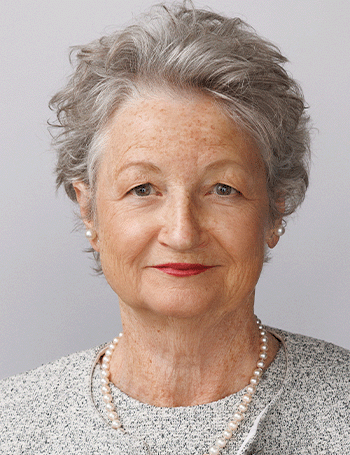
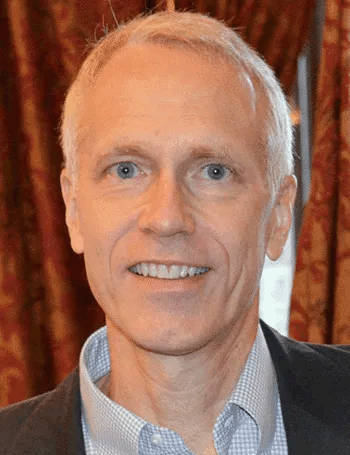
This event will be moderated by David Ginsburg, MD, James V. Neel Distinguished University Professor and Warner-Lambert/Parke-Davis Professor, Departments of Internal Medicine, Human Genetics and Pediatrics, University of Michigan Medical School. Dr. Ginsburg served as ASCI President, 2001-2002. He was elected to the ASCI in 1989.
With these awards, the ASCI seeks to recognize early-career physician-scientists who have made notable achievements in their research, and to encourage and inspire them through their participation in the ASCI physician-scientist community.
Early-Career Award benefits include:
a $750 honorarium
2 years of longitudinal early-career specific programming including Leadership Development Workshops, networking opportunities and topical panels with ASCI members
complementary registration for one AAP/ASCI/APSA Joint Meeting during the 2-year award period (discounted registration for the additional meeting if applicable).
ASCI staff will be available for drop-in office hours via Zoom (link here) to answer your questions about the nomination process from 1 – 2 pm Eastern on the following dates:
September 2 (Wednesday)
September 11 (Friday)
September 29 (Tuesday)
Nominee eligibility criteria:
E-Gen:
YPSA:
– has an MD, MD/PhD, or equivalent degree
– will have demonstrated creative promise during research training exemplified by publication and preprint activity (noted in biosketch)
– is currently meaningfully engaged in immersive research
– does not have an independent NIH K-08 level / equivalent award; a favorable score at the time of nomination is allowed
– must be nominated by an ASCI member
– may name a supporting contact (recommended), this person does not have to be an ASCI member and may provide a 250-word a letter of support
– has an MD, MD/PhD, or equivalent degree
– should preferably have a first faculty / institutional appointment within the past 5 years; if not within this range, nominees should note that extenuating circumstance(s) apply and may provide detail if they wish
– have a current NIH / comparable, foundation, or society-sponsored career development award (see nomination form for details)
– does not yet have current NIH R01 / equivalent independent project funding; a favorable score at the time of nomination is allowed. DP5s and R56s are also allowed; direct questions about R01 equivalents to programs@the-asci.org – must be nominated by an ASCI member
– may name a supporting contact (recommended), this person does not have to be an ASCI member and may provide a 250-word a letter of support
The nominator must be an ASCI member in good standing and must start the nomination:
Go to the “Activities / nominations” tab, then click to the applicable nomination section
Select “I’m the nominator” option
Search for your nominee:
If found, click on “Start nomination”
If no result is found, provide and save the requested information (first name, last name, and email address), then click on “Create nomination” for the newly created nominee in the “Results” section.
At the top of the nomination form, click on “Send access notification to the nominee at: <email>”.
Provide a 250-word-limit statement regarding the nominee.
Submit the statement, which can be done regardless of whether the nominee’s part of the nomination is completed.
The nominee receives an email with information to access their part of the nomination and then must provide the following:
E-Gen
YPSA
– nominee contact, education, funding information, and a headshot (the headshot will be used if awarded and is not used during the review process)
– a short bio (for use during review, and for public display if awarded)
– a brief NIH biosketch, any format (doc, docx, or PDF), using Section A. as a Scientific Vision Statement, rather than a Personal Statement, and including any funding information, for this award
– a completed ASCI demographics profile
– a completed ASCI research domains survey
– a supporter (optional, though highly recommended), who may provide a statement of up to 250 words – this individual does not have to be an ASCI member – nominees notify this individual via their portal
– nominee contact, education, funding information, and a headshot (the headshot will be used if awarded and is not used during the review process
– a short bio (for use during review, and for public display if awarded)
– a brief NIH biosketch, any format, including detailed funding information (doc, docx, or PDF)
– a completed ASCI demographics profile
– a completed ASCI research domains survey
– a supporter (optional, though highly recommended), who may provide a statement of up to 250 words – this individual does not have to be an ASCI member – nominees notify this individual via their portal
Note that the nominee can submit this information regardless of whether the nominator’s part of the nomination is completed.
The ASCI seeks volunteers from the ASCI membership for the following committees:
The Physician-Scientist Development Committee (PSDC): oversees efforts and programs related to early-career physician-scientists, including the Young Physician-Scientist Awards and the Emerging-Generation Awards. Terms are 2 years (May 2026 through April 2028). The PSDC typically meets for 45 minutes each month; and annually reviews and recommends recipients of the ASCI Emerging-Generation and Young Physician-Scientist Awards. More information: https://the-asci.org/committees/physician-scientist-development/
The Physician-Scientist Engagement Committee (PSEC): advances the Society’s mission by strengthening engagement across the physician-scientist community through its programs and initiatives; for example, supporting the Institutional Representatives program; conducting ASCI Perspectives video interviews with Society colleagues—and their patients—representing a wide range of experiences; and evaluating and recommending finalists for the Marian W. Ropes, MD, and Louis W. Sullivan, MD, Awards. Terms are 3 years (May 2026 through April 2029). The PSEC typically meets for 1 hour each month. More information: https://the-asci.org/committees/physician-scientist-engagement/
Service on these committees is an excellent way to learn about the work the ASCI is doing and to contribute, on a national scale, to the physician-scientist pathway.
All members are encouraged to apply. For both committees, we are looking for broad specialty and research-type representation.
Interested individuals should submit their statement of interest, biosketch, and CV by March 16, 2026, to programs@the-asci.org. Application materials will be reviewed by the standing committees with the hope to announce new committee members ahead of the 2026 AAP/ASCI/APSA Joint Meeting.
This session will be moderated by Kyu Rhee, MD, PhD, Co-Chair of the ASCI’s Physician-Scientist Development Committee, and Professor of Medicine and of Microbiology and Immunology at Weill Cornell Medical College.
The American Society for Clinical Investigation is proud to announce our 2026 Early-Career Awardees:
Young Physician-Scientist Awards
The ASCI Young Physician-Scientist Awards recognize physician-scientists who are early in their first faculty appointment and have made notable achievements in their research. Our 50 Young Physician-Scientist Awardees (see all awardees) were drawn from an exceedingly talented group of 172 nominees. We are proud to welcome our 13th class of Young Physician-Scientist Awardees.
Emerging-Generation Awards
The ASCI Emerging-Generation Awards recognize post-MD, pre-faculty appointment physician-scientists who are meaningfully engaged in immersive research. Our 29 Emerging-Generation Awardees (see all awardees) were drawn from an equally talented group of 116 nominees. We are proud to welcome our 5th class of Emerging-Generation Awardees.
With these awards, the ASCI seeks to encourage and inspire these physician-scientists through their participation in the AAP/ASCI/APSA Joint Meeting and through access to and participation in the ASCI community. These awards provide a two-year longitudinal experience that includes:
leadership development workshops
topical panel discussions with distinguished ASCI members
scientific and career-oriented networking and mentorship opportunities
Congratulations to our awardees and to the institutions they represent, and thank you for your support of the next generation!
Jay Kolls, MD, Professor of Medicine and Pediatrics, John W. Deming Endowed Chair in Internal Medicine, and Director of the Center for Translational Research in Infection and Inflammation at Tulane University School of Medicine, will present:
CD4+ T cell and Lung Immunity: lessons from HIV and primary immunodeficiencies
This session will be moderated by Julie Bastarache, MD, ASCI President-Elect and Associate Professor, Department of Medicine, Allergy, Pulmonary, and Critical Care Medicine, at Vanderbilt University Medical Center.
Brian Kobilka, MD, Professor in the Department of Molecular and Cellular Physiology and Hélène Irwin Fagan Chair in Cardiology at Stanford University, will present:
This session will be moderated by Robert J. Lefkowitz, MD, Chancellor’s Distinguished Professor of Medicine and Professor of Biochemistry and Chemistry at the Duke University Medical Center and Investigator of the Howard Hughes Medical Institute.
Dr. Kobilka and Dr. Lefkowitz share the 2012 Nobel Prize in Chemistry for their studies of G-protein-coupled receptors. They are also active mentors and co-Founders of the ASCI PSSF Fellowship for medical students.
Funda Meric-Bernstam, MD, Chair of the Department of Investigational Cancer Therapeutics – the Phase I Program, Medical Director of the Institute for Personalized Cancer Therapy, and The Nellie B. Connally Chair in Breast Cancer at The University of Texas MD Anderson Cancer Center, will present:
This session will be moderated by Rajan Jain, MD, Associate Professor of Medicine and Cell and Developmental Biology, and Founding Co-Director, Penn Measey Scholars in Molecular Medicine, University of Pennsylvania Perelman School of Medicine. Dr. Jain is a member of the ASCI Council and the Physician-Scientist Development Committee.
With these awards, the ASCI seeks to recognize early-career physician-scientists who have made notable achievements in their research, and to encourage and inspire them through their participation in the ASCI physician-scientist community.
2 years of longitudinal early-career specific programming including Leadership Development Workshops, networking opportunities and topical panels with ASCI members
Click here to view a webinar about these nomination processes. ASCI staff will be available via Zoom (link here) to answer your questions about the nomination process from 1 – 2 pm Eastern on the following dates:
August 20 (Wednesday)
September 5 (Friday)
September 22 (Monday)
October 7 (Tuesday)
Nominee eligibility criteria:
E-Gen:
YPSA:
– has an MD, MD/PhD, or equivalent degree
– will have demonstrated creative promise during research training exemplified by publication and preprint activity (noted in biosketch)
– is currently meaningfully engaged in immersive research
– does not have an independent NIH K-08 level / equivalent award; a favorable score at the time of nomination is allowed
– must be nominated by an ASCI member
– may name a supporting contact (recommended), this person may provide a 250-word a letter of support
– has an MD, MD/PhD, or equivalent degree
– should preferably have a first faculty / institutional appointment within the past 5 years; if not within this range, nominees should note that extenuating circumstance(s) apply and may provide detail if they wish
– have a current NIH / comparable, foundation, or society-sponsored career development award (see nomination form for details)
– does not yet have current NIH R01 / equivalent independent project funding; a favorable score at the time of nomination is allowed. DP5s and R56s are also allowed; direct questions about R01 equivalents to programs@the-asci.org
– must be nominated by an ASCI member
– may name a supporting contact (recommended), this person may provide a 250-word a letter of support
The nominator must be an ASCI member in good standing and must start the nomination:
Go to the “Activities / nominations” tab, then click to the applicable nomination section
Select “I’m the nominator” option
Search for your nominee:
If found, click on “Start nomination”
If no result is found, provide and save the requested information (first name, last name, and email address), then click on “Create nomination” for the newly created nominee in the “Results” section.
At the top of the nomination form, click on “Send access notification to the nominee at: <email>”.
Provide a 250-word-limit statement regarding the nominee.
Submit the statement, which can be done regardless of whether the nominee’s part of the nomination is completed.
The nominee receives an email with information to access their part of the nomination and then must provide the following:
E-Gen
YPSA
– nominee contact, education, funding information, and a headshot (the headshot will be used if awarded and is not used during the review process)
– a short bio (for use during review, and for public display if awarded)
– a brief NIH biosketch (as a PDF), using Section A. as a Scientific Vision Statement, rather than a Personal Statement, and including any funding information, for this award
– a completed ASCI demographics profile
– a completed ASCI research domains survey
– a supporter (optional, though recommended), who may provide a statement of up to 250 words
– nominee contact, education, funding information, and a headshot (the headshot will be used if awarded and is not used during the review process
– a short bio (for use during review, and for public display if awarded)
– a brief NIH biosketch, including detailed funding information (as a PDF)
– a completed ASCI demographics profile
– a completed ASCI research domains survey
– a supporter (optional, though recommended), who may provide a statement of up to 250 words
Note that the nominee can submit this information regardless of whether the nominator’s part of the nomination is completed.
Sharon Inouye, MD, MPH, Professor of Medicine at Harvard Medical School, Milton & Shirley F. Levy Family Chair, and Director of the Aging Brain Center at the Hinda and Arthur Marcus Institute for Aging Research, Hebrew SeniorLife, will present:
The inter-relationship of delirium and dementia: An investigative journey
This session will be moderated by Nisha Bansal, MD, MAS, Professor and the Arthur Stach Family Endowed Professor in the Division of Nephrology at the University of Washington. Dr. Bansal serves on the ASCI Physician-Scientist Development Committee.
Thank you for your participation, please stay tuned for details about our 2025-2026 program!