
Nominations open for mid-career member awards, 2026

The ASCI is pleased to call for nominations for awards recognizing the scholarly achievements of mid-career members:

The Marian W. Ropes, MD, Award recognizes a middle-career woman physician-scientist. The annual award honors Dr. Ropes (1903–1994), a pioneer both as a researcher on the role of synovial fluid in joint diseases and as a woman in academic medicine. She was the first woman documented to have been elected to the ASCI. The recipient of this award will receive a $10,000 honorarium, be recognized at the ASCI’s 2026 annual meeting, and give the Ropes Lecture at the 2027 meeting.

The Louis W. Sullivan, MD, Award recognizes a middle-career physician-scientist from a population underrepresented in medicine and science. The award honors Dr. Sullivan (born 1933), a hematologist, health care advocate, and policy leader — having served as US Secretary of Health and Human Services — and who was the first Black physician-scientist elected to the ASCI. The recipient of this award will receive a $10,000 honorarium, be recognized at the ASCI’s 2026 annual meeting, and give the Sullivan Lecture at the 2027 meeting.

ASCI members who were elected in 2021 or more recently may be nominated. Additionally:

  • For the Ropes Award, only female members are eligible for nomination.
  • For the Sullivan Award, only UiMS members are eligible for nomination.

The deadline for receipt of nominations is December 12, 2025, at 11:59 pm Eastern. Nominations will be screened to ensure they are complete and fit the award criteria. The ASCI’s Physician-Scientist Engagement Committee reviews nominations and submit recommendations to the ASCI Council for approval. We expect to notify nominees about the outcome in January 2026.

Nominators:

  • must be ASCI members; current members of the ASCI Physician-Scientist Engagement Committee are excluded; and
  • must provide a statement regarding the nominee (500-word limit).

Nominees:

  • must fit the criteria noted above and may not be current members of the ASCI Council and/or Physician-Scientist Engagement Committee;
  • may be nominated for only one ASCI award (for example, a nominee for the Ropes Award may not be nominated for the Sullivan Award, Korsmeyer Award, Harrington Prize, or Scharschmidt~Crawford Award);
  • must provide the following:
    • a personal statement (750-word limit) on their scientific achievements, with attention to relevant personal and career history, mentoring experience, and service to the community;
    • a full curriculum vitae; and
    • 3 most-significant publications, each with a 50-word annotation, followed by the member’s role in the publication, the journal name and publication year, and the Pubmed ID noted as “PMID:12345”;
  • must complete the ASCI’s demographics survey; and
  • must provide information regarding their research domain(s).

To start a nomination:

  • Access your member account
  • Go to the “Nominations” tab
  • In the section for the award of interest:
    • If you are the nominee, select the “I’m the nominee” option to start your part of the nomination (only you have access to this information); note that in the case of the Ropes Award, this option will not be available for male members.
    • If you are the nominator, select “I’m the nominator” option, then search for your nominee. Only nominees who were elected starting 2020 will appear in the results. Note: for the Ropes Award, you will only be able to select a nominee who is a woman; for the Sullivan Award, you may select anyone who is within the election-year window, but nominations will be screened (based on the information the nominee provides in the demographics survey) to ensure they fit the UiMS criterion.

Definition of UiMS

The ASCI defines underrepresented in medicine in science as follows: Underrepresented in medicine and science (UiMS) refers to populations that are underrepresented relative to their numbers in the general US population. This includes, but is not necessarily limited to, physician-scientists who identify in the following racial and/or ethnic groups: Black/African American, Hispanic or Latin American, Native American/American Indian or Alaska Native, and Native Hawaiian and other Pacific Islander; individuals with disabilities: physical or mental impairment that substantially limits one or more major life activities; and those with an educationally or financially disadvantaged background.
Nominations open for the 2026 Seldin~Smith Award for Pioneering Research

The ASCI is pleased to call for nominations for the 2026 Seldin~Smith Award for Pioneering Research. The annual award, accompanied by an unrestricted $30,000 grant to advance academic efforts, honors an early-career physician-scientist who has demonstrated exceptional creativity and accomplishments in biomedical research (see past recipients).

The deadline for receipt of nominations is December 12, at 11:59 pm Eastern.

The nominee:

  • must be an MD (or the equivalent);
  • must be more than 2 years but not more than 6 years from first faculty (or the equivalent) appointment as of April 2026; and
  • spends substantial time in research while providing direct patient care.

A nomination must be started by the nominator, who then notifies the nominee to complete her/his part of the nomination. The nominee identifies the supporter of the nomination and notifies that person through the submission site to complete her/his support form. Note: The nominee may not be a past recipient of the Foundation for the NIH’s Trailblazer Prize for Clinician-Scientists.

Nominations will be screened to ensure they are complete and fit the nomination criteria. The Seldin~Smith Award Selection Committee reviews nominations and provides recommendations to the Seldin~Smith Award Advisory Committee to determine the recipient.

The nominator must be an ASCI member in good standing and must start the nomination:

  • Access your member account
  • Go to the “Nominations” tab, then to the “ASCI / Seldin~Smith Award for Pioneering Research” section
  • Select “I’m the nominator” option
  • Search for your nominee:
    • If found, click on “Create nomination”
    • If no result is found, provide and save the requested information (first name, last name, and email address), then click on “Create nomination” for the newly created nominee in the “Results” section
  • At the top of the nomination form, click on “Send access notification to the nominee at: <email>”
  • Provide a 500-word limit statement on the nominee’s most significant achievement
  • Submit the statement, which can be done regardless of whether the nominee’s part of the nomination is completed

The nominee receives an email with information to access her/his part of the nomination and then must:

  • Provide a birth date and address information
  • Provide a summary (100-word limit) of her/his research, followed by a notation of the percentage of time devoted to direct patient care
  • Provide detail of:
    • Degrees obtained
      • Year of first faculty or equivalent appointment
    • Current institutional affiliation
  • Upload:
    • Current NIH-style biosketch
    • Three significant publications, each with an annotation (100-word limit)
  • Identify the nomination’s supporter and send notification to the supporter to access her/his support form
  • Complete a demographics survey
  • Identify research domain(s)
  • Submit this aspect of the nomination, which can be done regardless of whether the nominator or supporter has completed her/his statement

The supporter:

  • Does not need to be an ASCI member
  • Must be identified and notified by the nominee
  • Provides a statement (500-word limit) of the nominee’s research contributions (the statement should be distinct from that of the nominator)

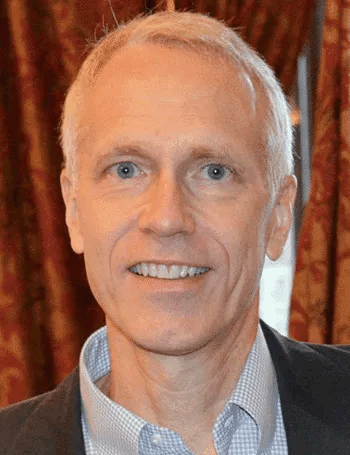
ASCI Scientific Session: Brian Kobilka, MD – November 10, 2025, 1-2pm E

Portrait of Dr. Brian Kobilka
Brian Kobilka, MD

November 10, 1-2 pm Eastern

Brian Kobilka, MD, Professor in the Department of Molecular and Cellular Physiology and Hélène Irwin Fagan Chair in Cardiology at Stanford University, will present:

My path to a career as a physician-scientist

Watch the Video

This session will be moderated by Robert J. Lefkowitz, MD, Chancellor’s Distinguished Professor of Medicine and Professor of Biochemistry and Chemistry at the Duke University Medical Center and Investigator of the Howard Hughes Medical Institute.

Dr. Kobilka and Dr. Lefkowitz share the 2012 Nobel Prize in Chemistry for their studies of G-protein-coupled receptors. They are also active mentors and co-Founders of the ASCI PSSF Fellowship for medical students.

Thank you for your participation!

Click here for more information and to view past ASCI Scientific Sessions.